Can Mobs Actually Topple Thailand's Government?
Fake images of anti-government crowds sparked investigation in Thailand, reflecting genuine public discontent as organizers plan street protests, though analysts question whether mobs can actually topple the government without backing from
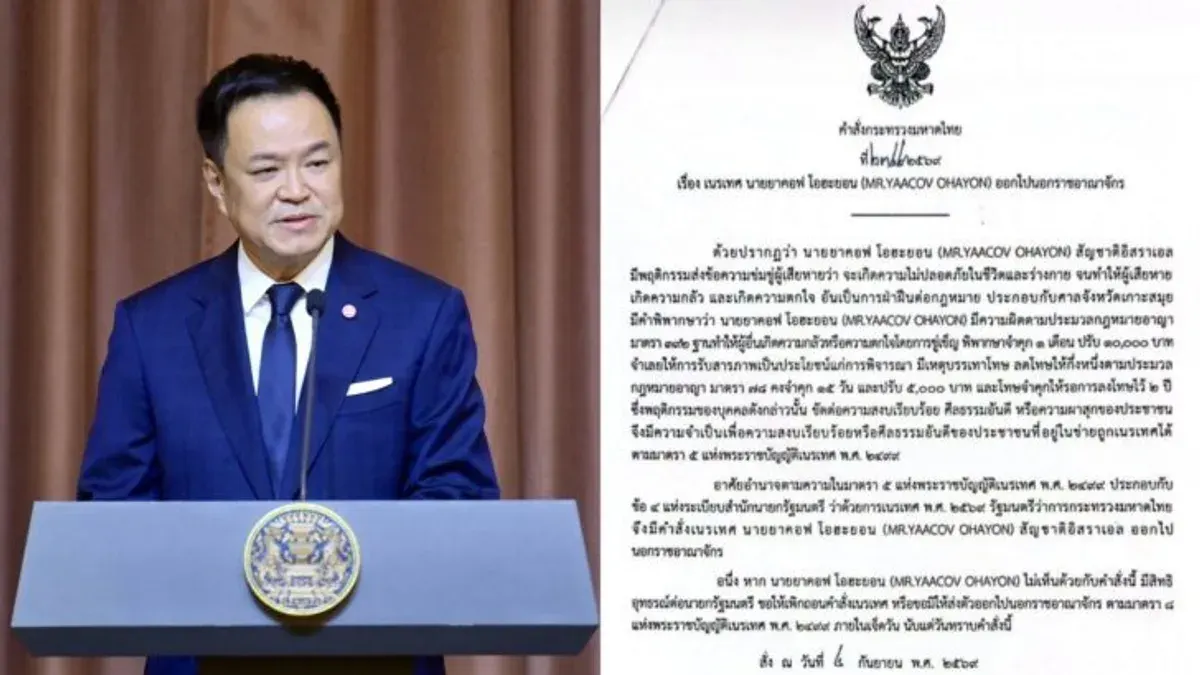
Last month, fake news images spread across social media falsely claiming that crowds had gathered to drive the government from Government House and packed Victory Monument, leading Prime Minister Anutin Charnvirakul to dismiss them as fabrications and order an investigation. While the images were entirely false, they reflected genuine and widespread public discontent with the government on multiple fronts that prompted the creation of such fake content. Recently, organizers announced plans to mobilize people for street demonstrations, using foreign-related issues circulating in Thai society to fuel a mob movement demanding the return of Thailand. The prime minister's response has been dismissive, repeatedly emphasizing that Thailand and Thai people owe nothing to anyone because the country belongs to all Thais, so there is no debt to reclaim. While his stance toward the forming mob may appear nationalist, it represents various groups dissatisfied with the government coming together, raising questions about what lies behind such movements.
Current Thai politics show the Phumjai Thai government under pressure from multiple rival factions. Even within conservative political circles, some figures have adopted anti-Phuea Thai positions, suggesting the ruling party has concentrated too much power. The parliament dissolution controversy has therefore expanded, as it represents a critical weakness with substantial evidence, pointing to blatant power consolidation.
The key question is whether Phumjai Thai still truly represents the shadow power network as before. Although the government faces public headwinds and has lost significant popularity, the question remains whether backing forces remain equally strong behind the scenes, with signs suggesting nothing fundamental has changed. The power centers controlling all networks still appear to trust Phumjai Thai. This confidence has left the Anutin government unshaken by expanding legal cases and by mobs stirring up movements for national reclamation on vague foreign grounds with possible political aims. Apart from the October 14, 1973 uprising when the entire nation rose to overthrow military dictatorship and demand democracy as genuine popular power, political mobs that have toppled governments over the past two decades have typically been linked to shadow power networks, orchestrated to overthrow elected governments and culminate in military coups following a predetermined script. If today the power centers controlling all mechanisms—independent organizations and the military—have not scripted any political change, previous successful mobs that paved the way for military takeovers may lack complete elements, and their final act may not yet have come. Modern mobs requiring hidden connections may not yet show signs of who will deliver the finale.