Deputy PM Leads Push for Bangkok Infrastructure Development
Deputy PM Somkid chaired a Bangkok development committee meeting that approved five infrastructure projects including a new fire station, flood protection improvements, and transit line expansions designed to preserve the city's historic ch
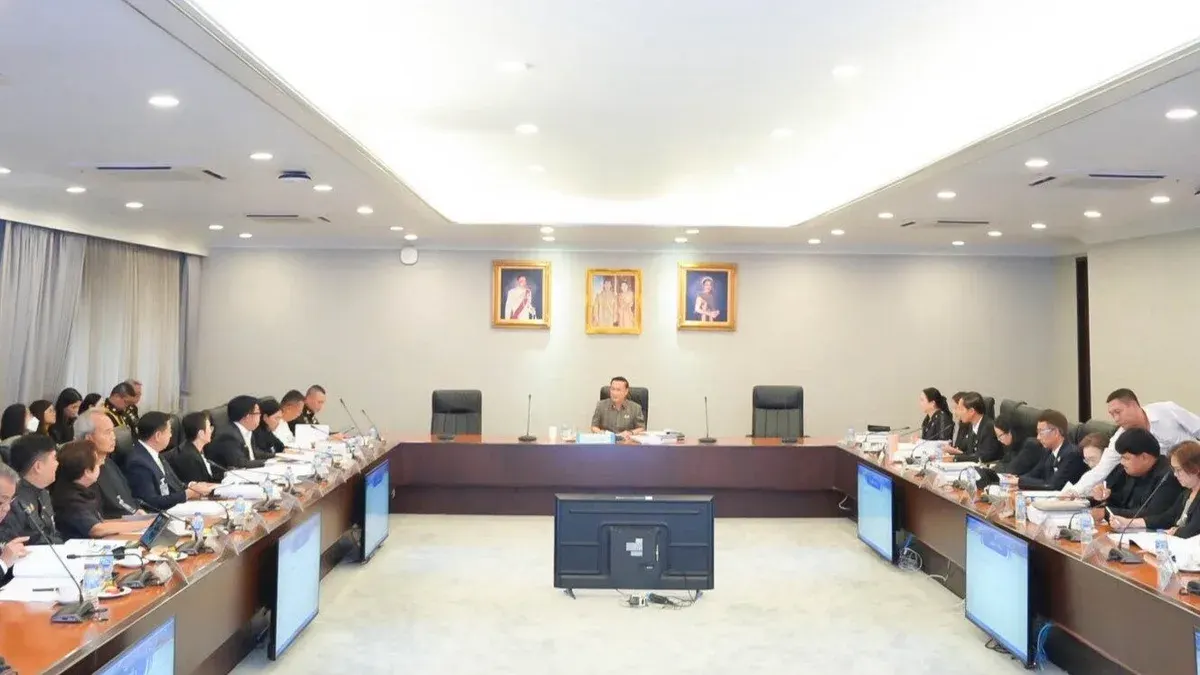
Deputy Prime Minister Somkid Jatusripitak presided over the first 2569 meeting of the Committee for the Conservation and Development of Bangkok and Historic Cities at Government House on September 25. Raviwarn Phuri-daet, Permanent Secretary of the Ministry of Natural Resources and Environment, and Nareerath Phan-monee, Deputy Secretary-General of the Office of Natural Resources and Environmental Policy and Planning, participated as committee members alongside experts and relevant agency representatives.
Somkid announced that the committee approved five infrastructure development principles for Bangkok. First, constructing a new fire and rescue station at Phu Khao Thong on Nakhon Sawan Road in Wat Somanas sub-district, designed to harmonize with surrounding architecture and improve fire prevention efficiency. Second, building a water drainage gate at the mouth of Wat Arun canal and upgrading flood protection along the waterway while preserving the canal and temple aesthetics and water tourism. Third, reconstructing the Tevestrunyimit Bridge for the Purple Line extension between Kao Poon and Rat Burana stations, reinforcing the structure while maintaining its original form and relocating components for reinstallation.
Fourth, redesigning entrance and exit points, ventilation buildings, and emergency exits at Siriraj, Sanam Luang, Democracy Monument, and Lan Luang stations on the Orange Line extension, with designs reflecting the areas' historical significance and surrounding architecture. Fifth, reinforcing the Leelah and Chaturaphakthrang overpasses for the Orange Line tunnel construction, preserving their structural integrity and original characteristics across different periods. The committee also mandated careful execution with public safety, traffic impact, and archaeological protection as priorities, with continuous monitoring. It accelerated conservation and heritage development efforts, approved restructuring of city-specific sub-committees, and recruited new expert committee members to guide sustainable preservation and development.