Doctor Warns Against Five Shoe Types During Heavy Rain
An emergency medicine doctor warns against wearing five shoe types during heavy rain—including worn soles, flip-flops, high heels, hard smooth soles, and ill-fitting shoes—recommending instead footwear with good tread grip and snug fit to p
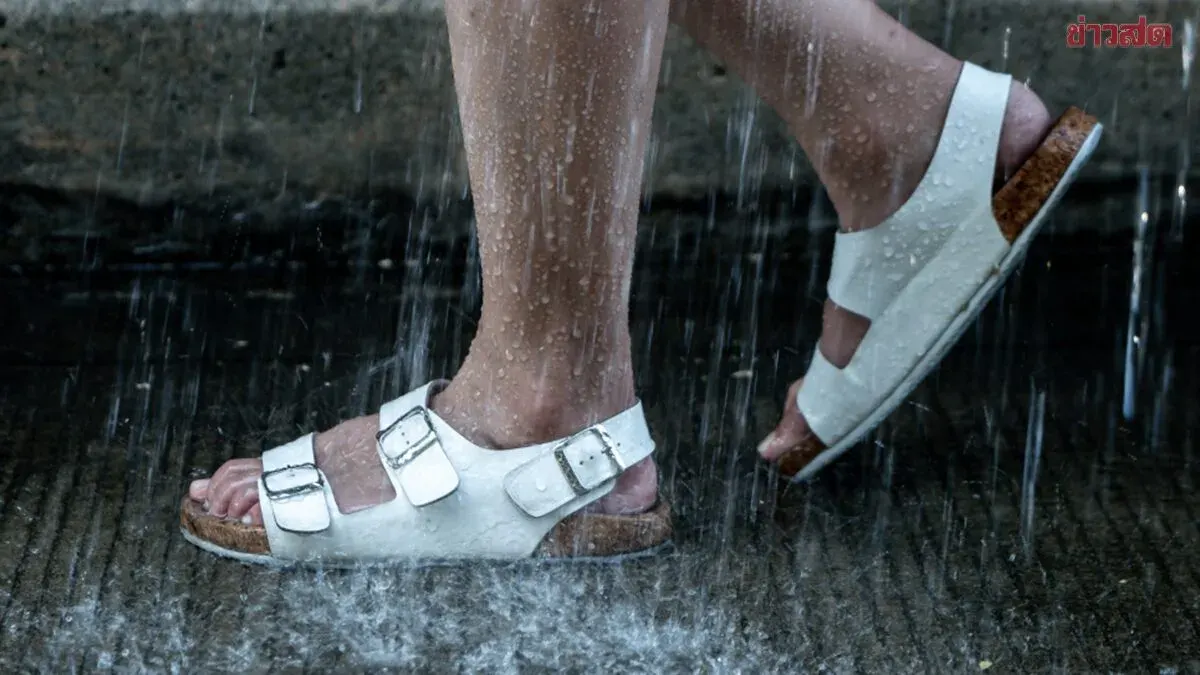
Heavy rain is falling continuously, making roads slippery and wet. A single misstep can result in a dangerous fall and injury. Emergency medicine specialist Dr. Wung Sewian has noted that during rainy periods, he frequently treats patients with slip-and-fall injuries and fractures. Many people wonder why stepping in just a little water can cause such serious falls and broken bones.
Dr. Wung Sewian shared on Facebook that worn shoe soles combined with wet, slippery surfaces can cause loss of balance and accidents from a single step. He identified five types of shoes to avoid on rainy days:
1. Old shoes with worn-smooth soles: When tread grooves become shallow, water drainage and ground grip efficiency decrease. Uneven or misshapen heels increase walking instability and fall risk.
2. Tight flip-flops and loose sandals: These cannot secure the heel properly, allowing the foot to slide inside the shoe. When stepping in standing water, shoes may slip off or be swept away.
3. High heels and thick-soled unstable shoes: These have minimal ground contact and raise the body's center of gravity, increasing risk of ankle sprains when stepping in water or on uneven surfaces.
4. Shoes with hard, smooth soles: On wet tiles, drain covers, or metal sheets—and along covered walkways and roads—friction between shoe and ground drops rapidly. The doctor notes that danger depends not on leather material but on sole texture and grip quality.
5. Oversized or undersized shoes: Oversized shoes allow foot sliding; tight shoes cause friction and blisters. Diabetic patients, who have reduced foot sensation, may develop wounds unnoticed.
How to choose safe shoes for rainy days?
Dr. Wung Sewian recommends four key principles:
- Shoe soles should have clear tread grooves and good grip - Shoe uppers and heels should fit snugly - Shoe size must fit properly - Laces or straps should secure shoes firmly
If shoe soles are worn flat or hardened, or heels are worn unevenly, consider buying new shoes. Beyond proper footwear, the doctor advises taking shorter steps, walking slowly, and avoiding sudden direction changes on rainy days.
One overlooked situation is the transition from outside to indoors, where wet tiles cause slips more easily than roads. Dr. Wung Sewian emphasizes that elderly people, diabetic patients, those with osteoporosis, and those with fall history should view proper shoe selection not as mere comfort but as essential injury prevention. The U.S. Centers for Disease Control also identifies foot problems and improper footwear as major fall risk factors in seniors.