Election Commission Plans Electronic Voting Machines for Ballots
Thailand's Election Commission plans to deploy electronic voting machines nationwide, starting with 250 sets currently available for smaller local elections before scaling up to larger contests.
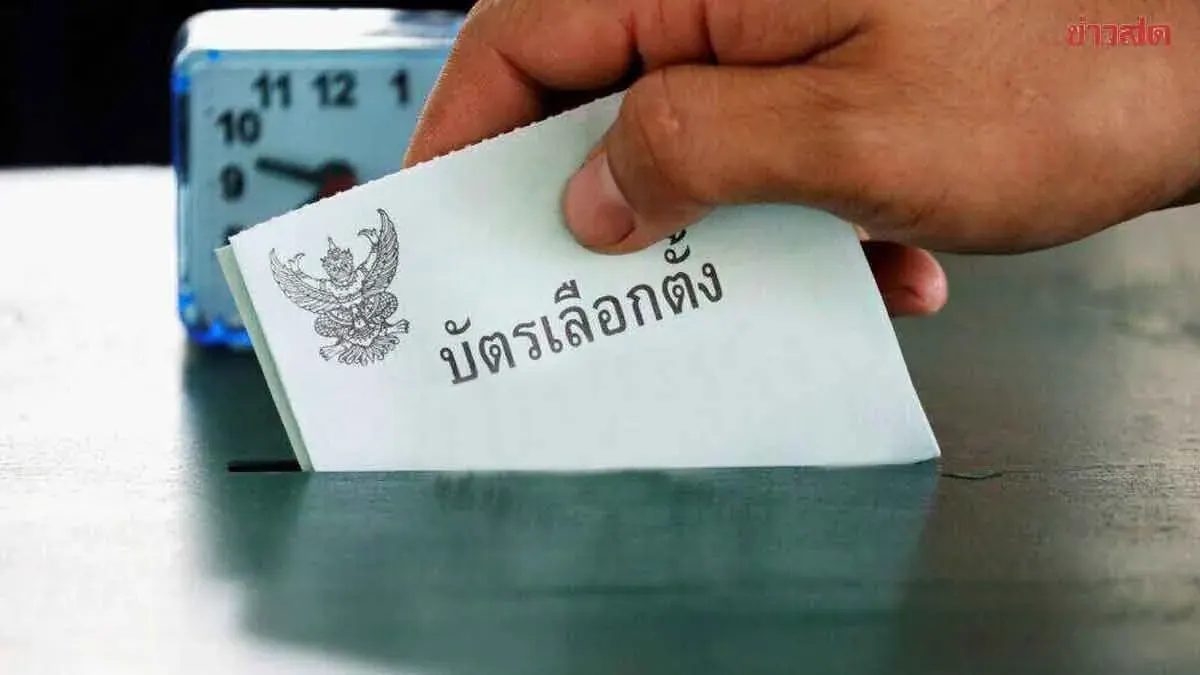
On September 29, the Election Commission announced plans to introduce electronic voting machines to replace paper ballots, following a Constitutional Court ruling on barcode and QR code ballots. The commission said it has 250 voting machine sets to distribute nationwide, with two sets per province. Each set contains one vote-counting machine and four voting booths with plastic barriers on three sides to ensure voter privacy.
Voters will select a candidate by pressing their number on a machine and confirming their choice. Results from all four machines feed instantly to a central counting unit. The machines operate as standalone systems with no internet, LAN, or Bluetooth connections, preventing external hacking or data interference.
The commission acknowledged that 250 sets are insufficient for large elections such as parliamentary elections, which would require 99,487 machines, or local administrative elections, which would need around 1,000 machines each. Currently, the machines are used in schools, universities, and the private sector for internal elections. The commission is drafting regulations to pilot the machines in smaller local elections such as subdistrict administrator elections and vacant positions before wider deployment.
The commission plans to develop more advanced, secure, and affordable models to enable mass production for larger-scale elections. The machines are expected to be used in early and out-of-country voting for general elections, with overseas voting methods still under review. Vote-counting via electronic machines would have saved substantial budget in the February 2024 parliamentary election, the commission noted.