Garbage Piles Obstruct Roads in Kheha Rom Klao
Garbage piles up to 1.8 meters high block the lanes of Kheha Rom Klao 1 after floodwaters receded, causing foul odors and preventing traffic. Residents have hired private trucks at 1,000 baht per trip to clear their waste while urging authorities to act quickly. Community leaders say some households lack the means to dispose of trash themselves, worsening the situation.
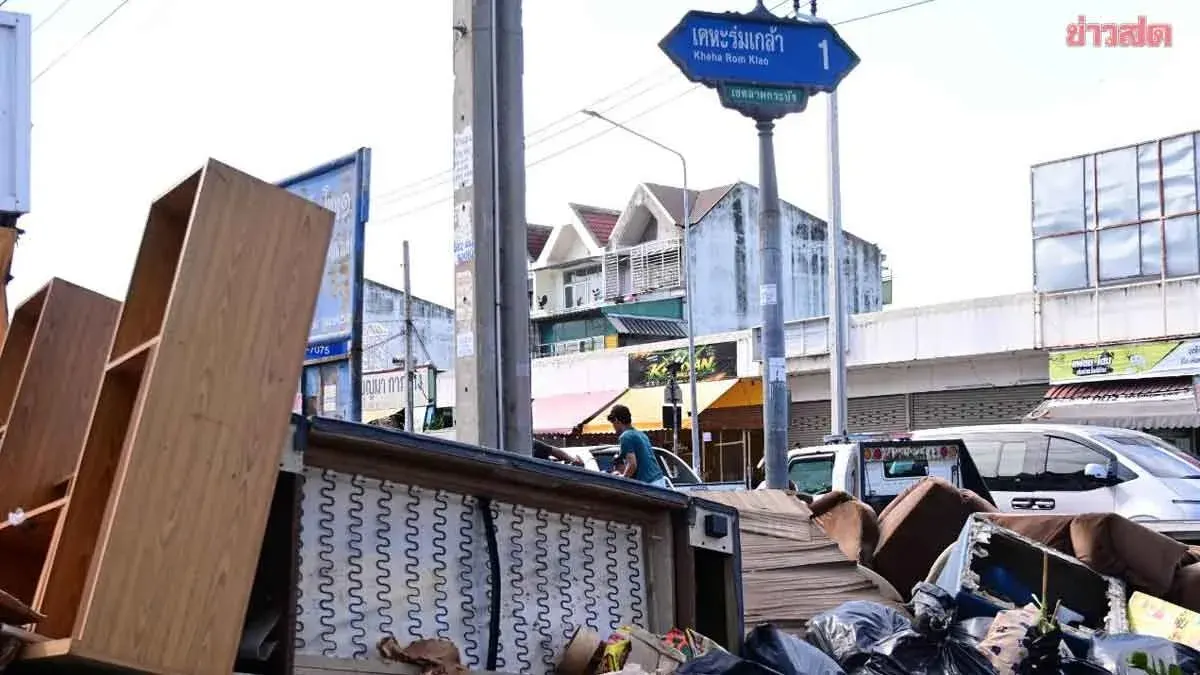
At 2:00 p.m. on October 9, 2025, reporters visited Soi Kheha Rom Klao 1 and found garbage mounds about 1.5 meters high at the lane’s entrance. Inside the lane, piles reached roughly 1.8 meters, surrounding the multipurpose field wall in the middle of the lane, with waste spilling onto the street. This made vehicle passage difficult and forced residents cleaning their homes to step out and inform drivers that the lane was impassable.
Ms. Suphatthana, 56, living at a corner house who must warn passing vehicles, explained that since floodwaters receded, people have dumped unusable items, spoiled rice, and various debris that floated with the flood, creating huge piles at nearly every corner and intersection, causing a stench and blocking traffic. She said vehicles cannot enter or exit the lane.
She added that although the community chief had warned against dumping garbage, she understands some households lack the means to take trash outside, so they need agency assistance. The garbage situation has left her weary, as she must constantly tell others not to park in the lane, fearing they will worsen congestion, even though she feels harsh for doing so.
Initially, some officials have begun cleanup, but she hopes they can act faster, acknowledging their daily efforts while noting that new trash keeps appearing as residents continue cleaning their homes. She personally hired a garbage truck for 1,000 baht to haul her own waste outside, unable to wait any longer, and does not want to be a burden, though she has left some of her trash at the lane entrance.
Regarding relief, she believes the government should act swiftly because many people have no money; some flood victims still lack clothing, and they need timely assistance to meet their needs.