KGH Launches Affordable Hotel Brand Amid Thailand Tourism Recovery
KGH, operator of the Kokotel hotel brand, manages 56 hotels with over 4,000 rooms across Thailand, the Philippines, and Japan. It plans to launch an affordable new brand in November, use AI to cut costs, and partner with KKP for funding, even as Thailand’s tourism recovery remains incomplete. The firm sees the challenging market as an opportunity to improve hotel management efficiency and expand its portfolio.
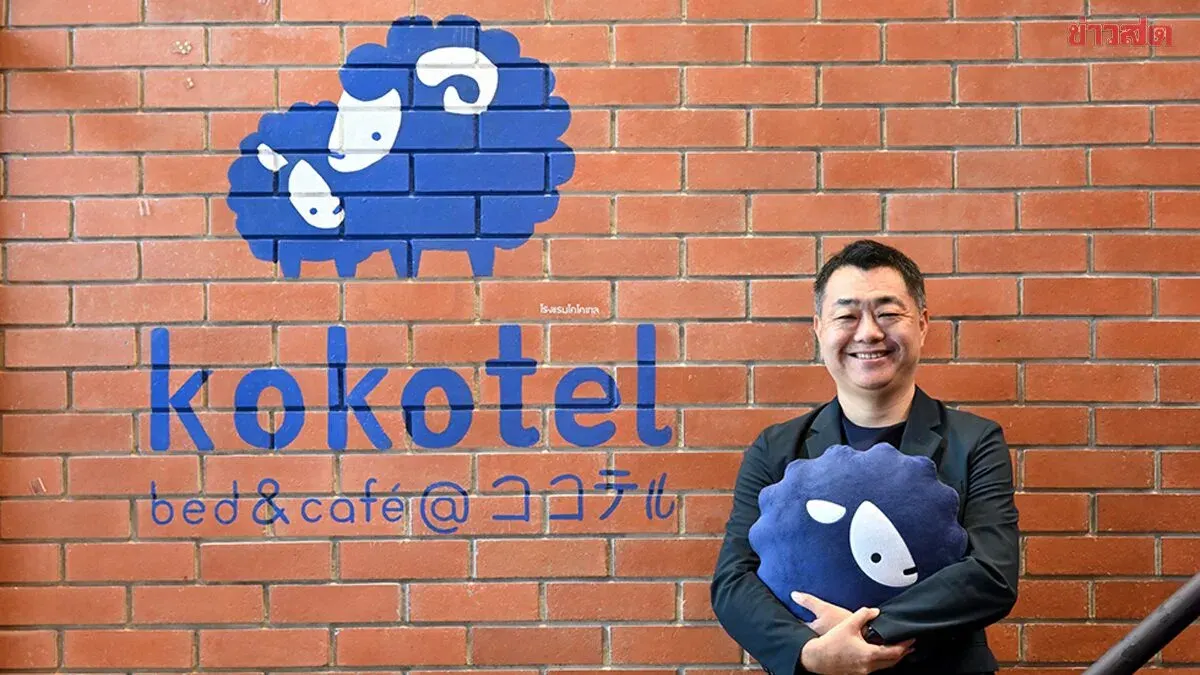
KGH, which operates hotels under the Kokotel brand, reported that after 11 years in business it oversees 56 properties totaling more than 4,000 rooms in Thailand, the Philippines, and Japan. The company said it will open a new budget‑friendly brand in November to capture Thai tourists looking for quality accommodation at accessible prices, will deploy AI to reduce operating costs, and has teamed up with KKP to secure funding for hotel investments, despite Thailand’s tourism sector not yet fully recovering to pre‑COVID‑19 levels.
Ray Matsuda, founder and CEO of Kok Global Hospitality (Thailand) Ltd, said the Thai hotel business continues to face challenges because foreign tourist numbers have not rebounded to their pre‑pandemic strength, while Japan shows steady growth in international arrivals. This situation pushes Thai hotel operators to adjust strategies to maintain revenue and profitability.
However, KGH views the environment as an opportunity for its hotel‑management services, noting that independent hotel owners are likely to seek experts to improve operational efficiency, cut costs, and raise service standards to stay competitive in an uncertain market.
Currently, KGH has been operating since its establishment in 2015 and manages a portfolio of 56 hotels with over 4,000 rooms across the three countries. Of these, 36 properties are already open, offering more than 2,400 rooms. The company aims to expand to 1,000 hotels in ten countries and six continents by 2035.
KGH’s model focuses on small‑to‑medium hotels averaging about 70 rooms each, and it operates both as an owner and under management contracts for other owners. It presently owns five hotels—four in Thailand and one in the Philippines—while the rest are managed under contracts or provide consulting services under cooperation agreements with asset owners.
To cope with fluctuating hotel revenues, Ray noted that while company revenue rises with the number of hotels in the portfolio, profits are affected because a portion of management‑fee income is tied to the performance of the managed hotels. He added that 2024 saw a strong tourism recovery, but 2025 has been hampered by an earthquake, Thailand‑Cambodia tensions, and criminal incidents involving Chinese tourists, which have dented confidence among some traveler segments.
Looking ahead, KGH expects 2026 performance to improve markedly year‑on‑year and possibly approach 2024 levels, although profits may remain slightly lower. Expanding the portfolio helps diversify reliance on any single hotel’s income and improves the allocation of headquarters costs across a larger base.
The company is concentrating on controllable factors: revenue management, enhancing guest experience, boosting review scores, and streamlining processes for greater efficiency—especially cost control and increasing staff productivity. Currently KGH employs about 25 staff per 100‑room hotel, or 0.25 staff per room, a level relatively low compared with traditional Thai hotel models, but it sees further efficiency gains by redefining staff duties to enable multitasking.