Thailand Launches Low-Carbon Hotel Initiative With 5,000-Property Target
Thailand is launching a five-year low-carbon hotel initiative targeting over 5,000 properties nationwide to reduce energy costs and emissions while achieving international environmental standards, starting with 80 pilot hotels across 10 pro
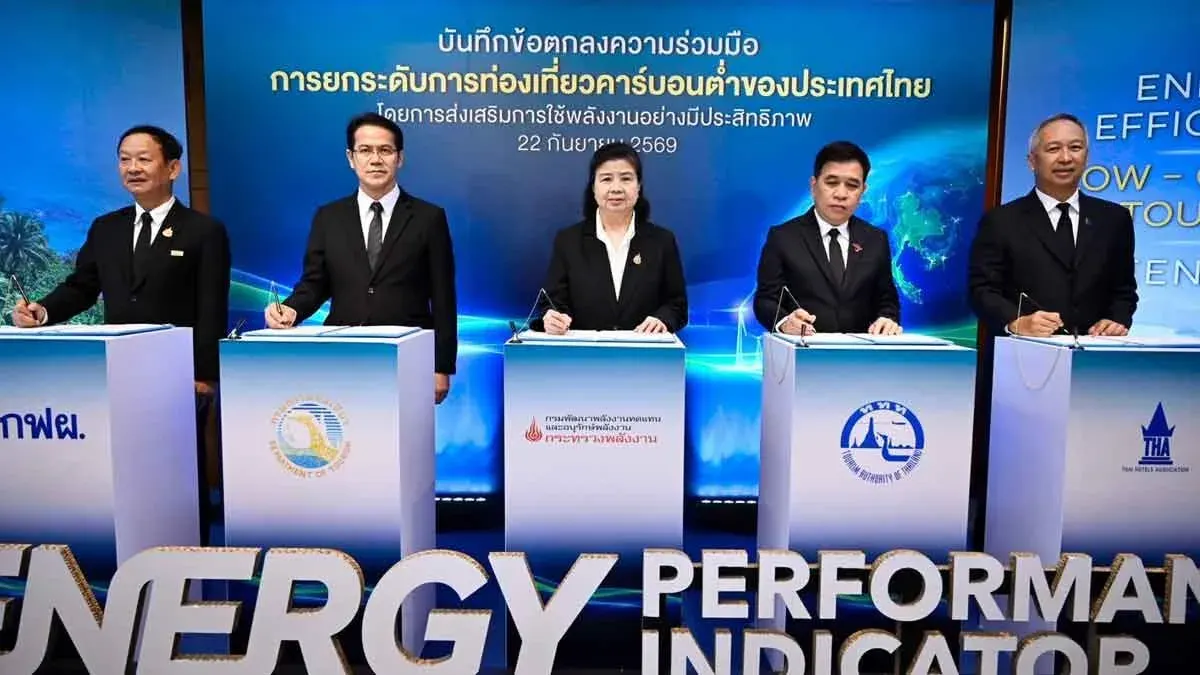
The Department of Alternative Energy Development and Efficiency has signed a five-year memorandum of understanding (2026–2031) with the Tourism Ministry, Thailand Tourism Board, Thai Hotels Association, and the Electricity Generating Authority of Thailand to advance low-carbon tourism across the country. The collaboration will use energy efficiency improvements as a key mechanism to reduce costs and emissions, targeting more than 5,000 hotels nationwide to join the Energy Performance Index and Carbon Footprint Hotels platform, achieving international environmental standards such as five-star hotels, Green Hotel certification, GSTC accreditation, and Good Travel Seal status, with a goal of reducing Scope 2 emissions by 10 percent.
In the first fiscal year (2027), the program will select 80 hotels rated two to five stars across 10 provinces—Chachoengsao, Rayong, Chanthaburi, Trat, Samut Songkhram, Phetchaburi, Prachuap Khiri Khan, Krabi, Phang Nga, and Phuket—to participate in the initiative. The plan supports Thailand's transition to carbon neutrality by 2050 and aligns with the Nationally Determined Contributions 3.0 target of reducing greenhouse gas emissions by 60 percent, or 109.2 million metric tons of carbon dioxide equivalent, from the 2019 baseline.
The five-year collaboration framework integrates public and private sector efforts, encompassing data collection, energy performance assessment, model hotel development, technology deployment suited to hotels of all sizes, access to financing mechanisms, standard improvements, and market communication. This approach aims to make energy cost reduction and carbon reduction integral to strengthening the competitive capacity of Thailand's tourism industry over the long term.