Lawmaker Cuts Environment Ministry Budget 5%, Demands Source-Based Toxin Control
An MP cut the Environment Ministry's budget by 5% and demanded the government tackle pollution at its source rather than only monitoring contaminated water downstream, citing rare earth mining toxins spreading from neighboring countries int
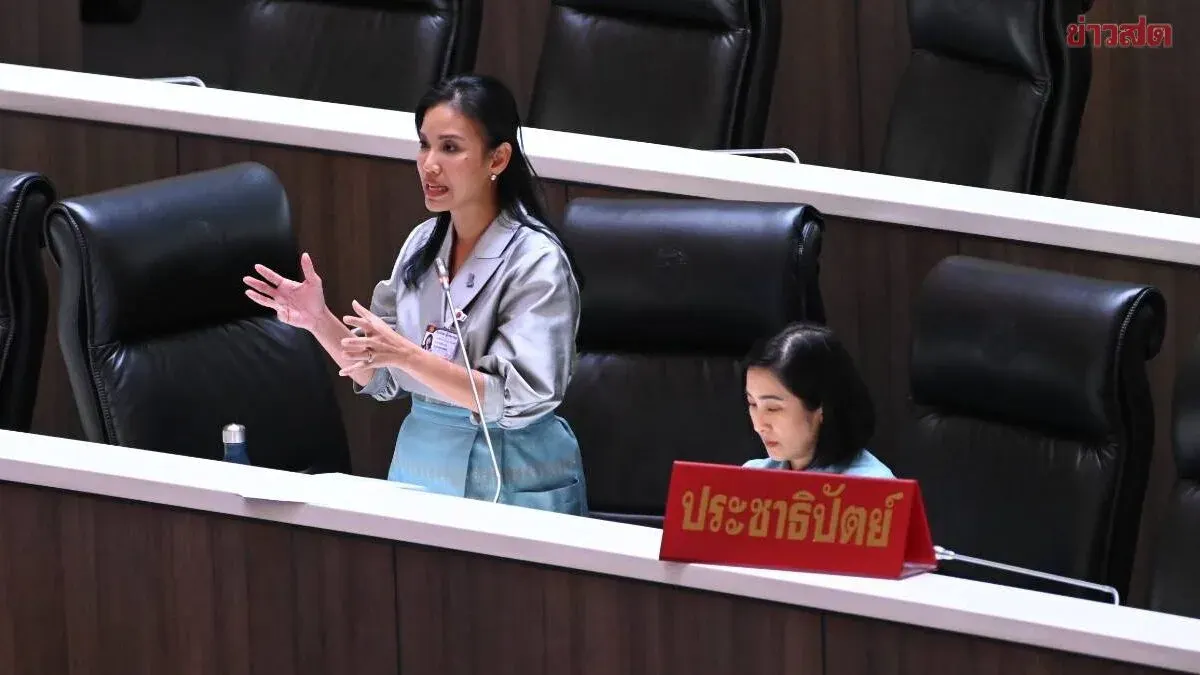
Democrat list MP Radthakla Intawong raised concerns during a parliamentary budget session on the Natural Resources and Environment Ministry's response to cross-border toxin contamination from rare earth mining operations in neighboring countries affecting northern Thailand's water systems. She warned that chemical and heavy metal pollution has spread beyond the Mun River to the Mekong River itself, a far graver situation given the Mekong's greater water volume and depth, and emphasized the urgent need to identify pollution sources systematically rather than only monitoring downstream.
Intawong criticized the 83.9 million baht Environmental Protection Efficiency Project for financing water quality monitoring stations, drones, and enforcement—but nothing to stop pollution at its source. She argued that monitoring alone cannot halt toxins entering from upstream, and questioned whether the government will repeat expensive downstream response measures every year if the source remains uncontrolled. She noted that the Regional Waterworks Authority has allocated 2.2 billion baht to shift raw water sources, while 188 million baht in central funds go to recovery and remediation—costs that could be avoided by addressing root causes.
Intawong proposed three solutions: first, use science diplomacy and real-time water monitoring data with toxin dispersion modeling to identify sources and negotiate with upstream countries; second, enforce Best Available Techniques and Best Environmental Practices standards on mines and industry to reduce wastewater and waste generation; and third, establish systematic safety and health oversight for farmers and communities dependent on natural water sources rather than municipal supply.