MP Distributes 4 Tons of Pumpkins as Prices Plummet to 3 Baht Per Kg
Chiang Mai MP Nerapol Tantimontree distributed 4 tons of pumpkins at parliament after prices collapsed to 3 baht per kilogram, leaving farmers unable to cover production costs of 5 baht per kilogram.
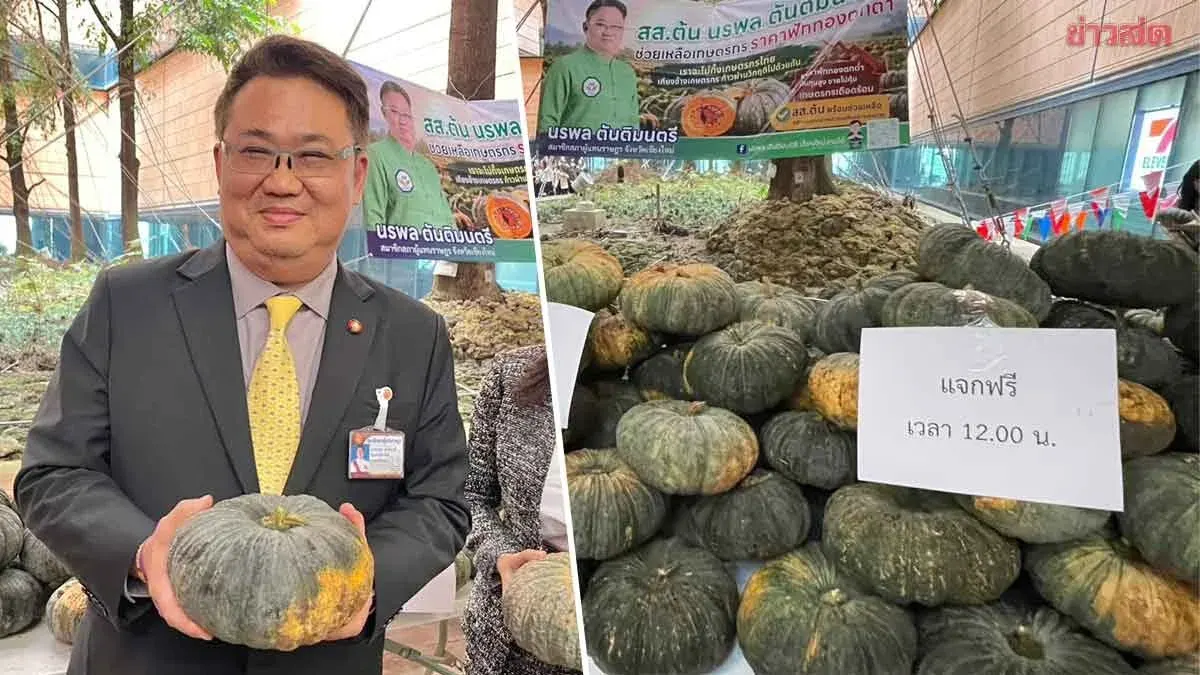
At noon on September 10, 2025, at the National Assembly, MP Nerapol Tantimontree of the Krathathom Party from Chiang Mai brought approximately 4 tons of pumpkins sourced from farmers in Mae Chaem district to distribute among parliament staff and members of the public. The distribution followed a severe price collapse for agricultural produce, with about 2 tons initially delivered to parliament to help move inventory and ease farmer hardship.
Nerapol explained that pumpkin prices had dropped dramatically to just 3 baht per kilogram, but when transport costs are included, the effective production cost reaches approximately 5 baht per kilogram, leaving farmers heavily loss-making. This squeeze occurs despite high input costs for fuel, fertilizer, and other production factors.
"Farmers asked for our help, so we decided to bring pumpkins here to share with the people as another channel to move goods," Nerapol said. "Members of the public began arriving from 11 a.m. onward to receive pumpkins, showing that people are ready to support Thai agricultural products if distribution channels exist."
Nerapol urged the government and Commerce Ministry to accelerate measures to support agricultural prices, specifically calling for the revival of agricultural price guarantee programs as a direct aid tool for farmers who cannot control market prices when their harvest reaches market.
"Today fuel is expensive, fertilizer is expensive, but when produce comes out, farmers cannot control the price and must sell low. I call on the government to prepare contingency measures for various crises—fuel prices, weather, and other factors affecting yield—so farmers do not bear risk alone," he said.
Nerapol also proposed that members of parliament from other provinces with depressed agricultural prices in their areas bring produce to parliament to open new market channels and raise public awareness about seasonal products. This approach would help farmers while providing consumers with quality goods at fair prices.