Thailand Explores Hydrogen-Gas Blend to Boost Clean Energy Transition
Thailand is exploring hydrogen-natural gas blends to transition away from fossil fuels while maintaining grid stability, with state utility EGAT studying 5% hydrogen blending at six power plants as a gradual shift toward cleaner energy afte
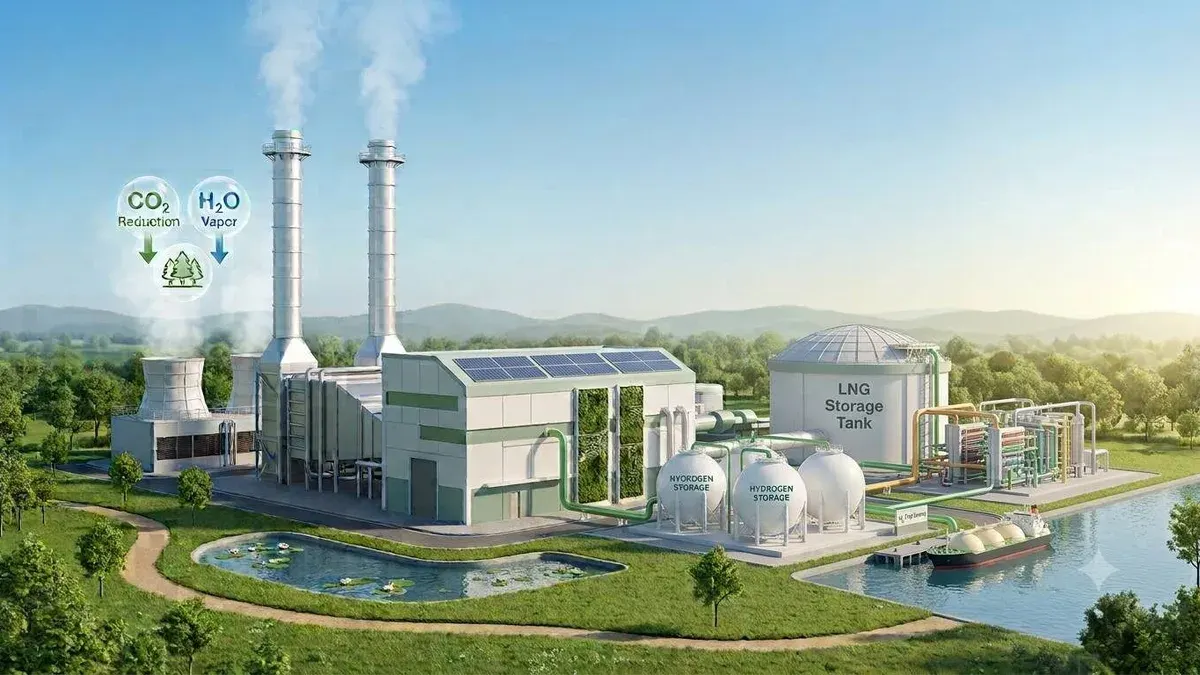
As the world accelerates carbon reduction efforts, electricity demand continues to rise from economic and technological expansion. The critical question is not just "how much clean energy can we use" but "how do we transition from fossil fuels to clean energy without compromising national grid stability?"
Thailand currently depends on natural gas for 50-60% of power generation to maintain grid stability. Abruptly switching to 100% renewable energy is difficult because of existing constraints on grid stability and infrastructure readiness. Mixing hydrogen with natural gas for electricity generation—known as hydrogen co-firing—has emerged as an attractive option. The approach gradually increases hydrogen's share while reducing natural gas use as technology and costs permit.
How does hydrogen cut carbon?
Hydrogen (H2) is a colorless, odorless gas with higher thermal value than fuel oil and natural gas, and contains no carbon. When burned, it produces no carbon dioxide (CO2) emissions. By blending hydrogen with natural gas for power generation, CO2 emissions can be reduced proportionally to the fuel substitution rate. Hydrogen is therefore viewed as a critical technology for transitioning to clean energy. However, hydrogen faces significant cost barriers—it is much more expensive than natural gas. Rapid deployment could raise electricity costs, and current hydrogen supply and infrastructure are insufficient for widespread use.
Takasago Hydrogen Park's T-Point 2: From Lab to Commercial Scale
Mitsubishi Heavy Industries' Takasago Hydrogen Park, located in Hyogo Prefecture, Japan, is the world's first comprehensive hydrogen technology testing center, covering hydrogen production, storage, and power generation. MHI has developed advanced combustor technology enabling stable hydrogen-natural gas co-firing with low nitrogen oxide (NOx) emissions. In 2023, MHI achieved a historic first by successfully demonstrating 30% hydrogen blending with natural gas using five JAC gas turbines at T-Point 2, a 566-megawatt GTCC testing facility connected to the grid, reducing CO2 emissions by 10%. In 2024-2025, MHI will test 100% hydrogen combustion in the mid-size H-25 gas turbine (40 megawatts) to prepare for commercial production, with large gas turbines targeted to support 100% hydrogen operation after 2030.
Thailand Stays on Track with Hydrogen Studies
The Energy Ministry has positioned hydrogen as a future energy technology, expecting it to play a role in Thailand's power system after 2040, given current constraints on cost and commercial readiness. The Electricity Generating Authority of Thailand (EGAT) has been studying the feasibility of blending 5% hydrogen with natural gas for power generation across six EGAT power plants, including Nonthaburi North, Nonthaburi South, and Wangnoi power stations.