Over 1,300 Illegal Tires Seized in Bangkok Crackdown
Authorities seized over 1,300 counterfeit and substandard tires from Bangkok retailers, with most bearing fake quality marks that deceive buyers into purchasing unsafe vehicles components. The dangerous tires failed safety standards and pos
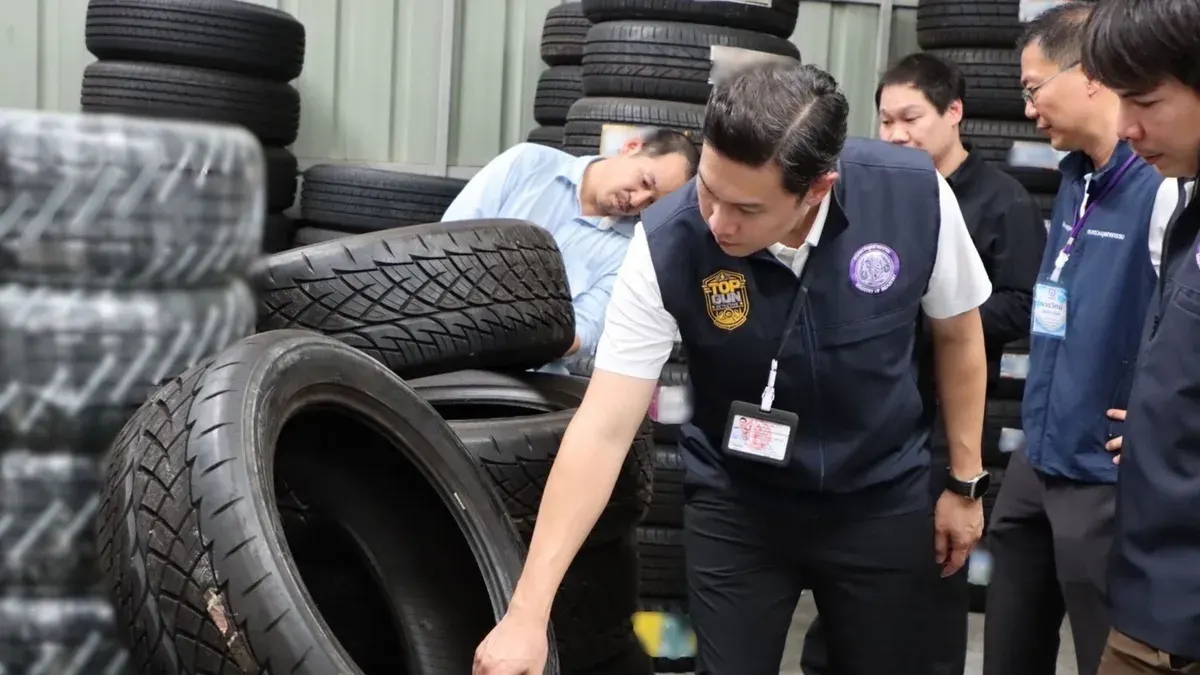
The Topgun task force and Thai Industrial Standards Institute conducted a sweeping inspection of 11 major tire retailers in Bangpli, Samut Prakan, seizing 1,341 tires. Of these, 18 tires lacked proper Thai Industrial Standard (TIS) marks and QR codes, while 1,315 tires bore counterfeit TIS marks and falsely claimed to originate from licensed factories. Investigators discovered that scanning the QR codes revealed discrepancies between label information and actual factory license details. Eight additional tires had their brand names erased, with unclear origins—possibly used tires or factory rejects that had been resurfaced and rebranded.
Such practices deceive consumers into believing they are buying genuine branded tires while remaining unaware of quality control history or roadworthiness. Substandard tires pose serious safety risks, as they are critical components directly affecting vehicle safety; defects at high speed can cause accidents resulting in loss of life and property damage.
General Bunyuatthong urged consumers to check for TIS marks and scan QR codes before every tire purchase to verify manufacturer and importer details and ensure label information matches. Counterfeit or substandard tires do not meet performance and safety testing requirements and may unknowingly expose drivers to danger.
Nonnit Romyanan, Secretary-General of TISI, noted that the seized tires—for sedans and pickup trucks—must comply with TIS standards 2718-2560 and 2721-2560, covering pneumatic tire performance, durability, wet grip, noise, and rolling resistance. Substandard tires increase accident risk by failing required performance tests. Brand-erased tires are especially problematic because their manufacturer, importer, production date, and usage history cannot be traced, making them untraceable and often sold at artificially low prices that mask underlying quality and safety concerns.