Politician Claims Video Proves Senate Chief Submitted Ballot
A People's Party MP released video evidence claiming to show Thailand's Senate President submitting a ballot during recent Senate elections, allegations the president has repeatedly refused to address publicly.
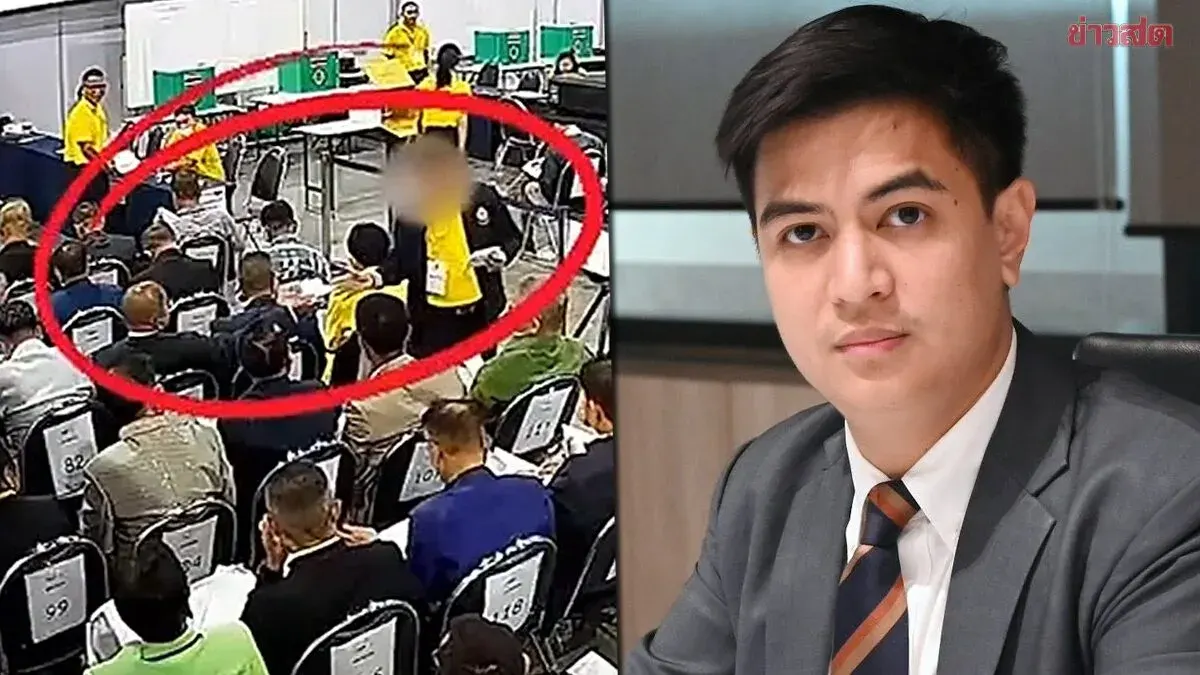
On July 24, Pricha Watcharasindhul, a People's Party list MP, posted video evidence of alleged ballot fraud in Senate elections, stating that new footage confirms with 100 percent certainty that one of the Senate candidates who submitted a ballot to the election commission is Senate President Mongkol Suratthadsaja.
About a month earlier (June 15), Pricha noted observations based on the number and physical appearance of candidates in footage of the national Senate election, suggesting that one candidate submitting a ballot to the commission was Mongkol Suratthadsaja, who now serves as Senate President. Subsequently, President Mongkol refused to answer media questions twice (July 17 and July 7) about whether he was the person in the video, instead directing journalists to ask Pricha.
Pricha stated that Mongkol's refusal to answer directly is itself a form of confirmation. However, he said he has now obtained new video evidence showing Mongkol's face clearly and confirming that the person in the footage is indeed Mongkol Suratthadsaja with 100 percent certainty, beyond any doubt (visible in the final 10 seconds of the video).
Over the past one to two months, various parties have released information related to the alleged Senate fraud scheme, including election commission video of ballot collection, provincial fraud operation details, testimony from four witnesses presented by the opposition two weeks ago, and data compiled by iLaw earlier this week. These materials contain specific allegations directed at senators, politicians, or election officials named explicitly.
However, rather than responding to or clarifying these allegations to the public, many public figures have chosen to avoid questioning, deflect, change the subject, sue their accusers, or spread unofficial information to intimidate those conducting oversight. Mongkol's case demonstrates that choosing not to answer questions is itself a form of response. As evidence continues to emerge publicly without waiting for answers, such officials will find it increasingly difficult to respond.