Royal Irrigation Department Monitors 12 Flood-Risk Provinces
Thailand's Royal Irrigation Department is monitoring 12 flood-prone provinces as heavy monsoon rains continue across the North and Northeast, with personnel and equipment ready for immediate deployment if flooding occurs.
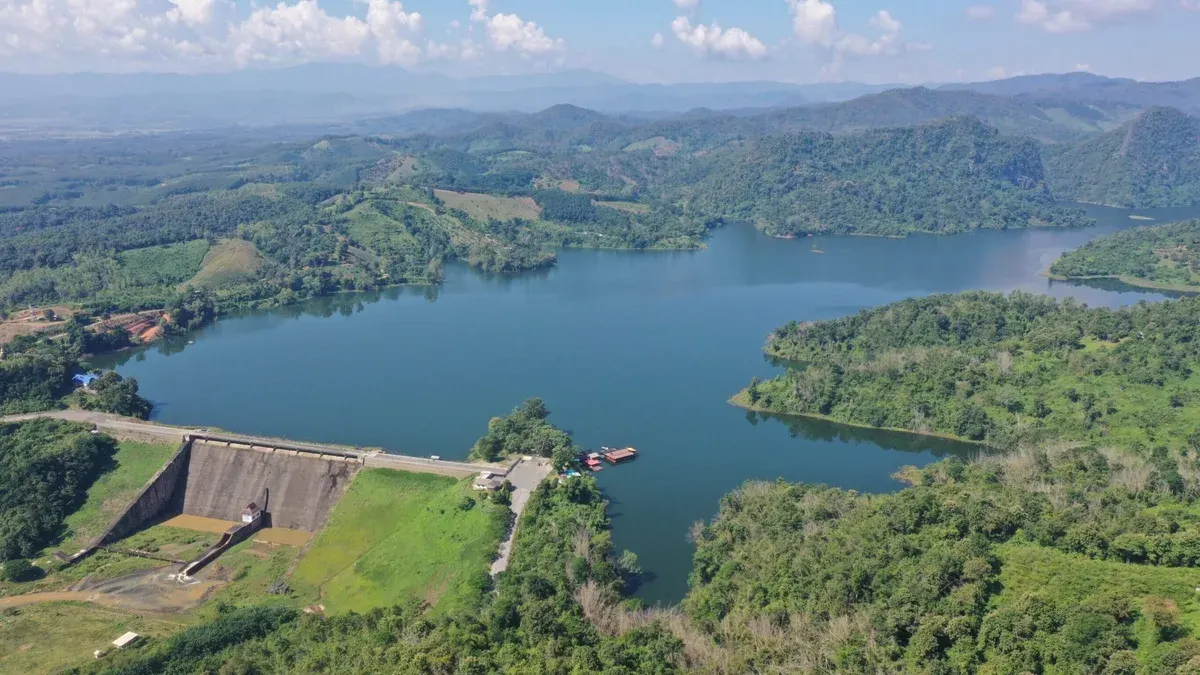
The Royal Irrigation Department is closely tracking water conditions nationwide and standing ready to assist residents immediately if flooding occurs. Agriculture Minister Suriya Jungrungreangkit stated that Thailand continues to experience ongoing and heavy rainfall, especially in the North and Northeast, and has ordered heightened alert for 12 flood-prone provinces. He emphasized that machinery, tools, and personnel are prepared for immediate deployment to help residents if needed.
The Smart Water Operations Centre reported conditions as of August 11, 2026, with heavy rain continuing due to a monsoon trough crossing the upper North and northern Laos, combined with strong southwest monsoon winds affecting the Andaman Sea, Thailand, and the Gulf of Thailand. The public must remain vigilant against severe rainfall and accumulated precipitation that could cause flash floods, flash flows, and riverbank overflow, particularly in foothill areas, near waterways, and in low-lying zones. The highest rainfall accumulation in the past 24 hours was 111.2 millimetres in Nan Mueang District, followed by 96 millimetres in Phayao Province and 86 millimetres in Nan Province.
Large and medium-sized reservoirs nationwide currently hold approximately 44,836 million cubic metres, or 58 percent of total capacity, with additional capacity of over 31,830 million cubic metres available. Many reservoirs can still absorb the heavy, continuous rain. The Chao Phraya River basin at Nakhon Sawan's C.2 station had a flow rate of 850 cubic metres per second, with water levels 6.45 metres below the bank, while the Chao Phraya Dam had a flow rate of 400 cubic metres per second.
The 12 provinces under special flood alert are Chiang Rai, Chiang Mai, Mae Hong Son, Nan, Mukdahan, Saraburi, Roi Et, Yasothon, Nakhon Phanom, Udon Thani, Phitsanulok, and Amnat Charoen. Local authorities have been ordered to closely monitor conditions, assess impacts, and prepare pumping equipment and tools for emergency response.
The Meteorological Department forecasts that from August 10–16, the North and Northeast will experience thunderstorms in 60–70 percent of areas with heavy rainfall at times, while the Central Region will see thunderstorms in 40–60 percent of areas with occasional heavy rain. The East will see 60–70 percent thunderstorm coverage on August 10–11, decreasing to 40–60 percent from August 12–16. The western South will continue to experience heavy rain in upper areas. Flash floods, flash flows, and riverbank overflow are possible, particularly in foothill and low-lying areas. The upper Andaman Sea will see waves 2–3 metres high, with thunderstorm areas experiencing waves exceeding 3 metres; small vessels are advised to remain ashore during warning periods.