Senate Challenger Files Court Challenge Over Candidate Screening
Reserve senate candidates have filed a Supreme Court petition challenging the Election Commission's handling of a disputed candidate screening process, arguing the investigation should examine broader patterns rather than prosecuting indivi
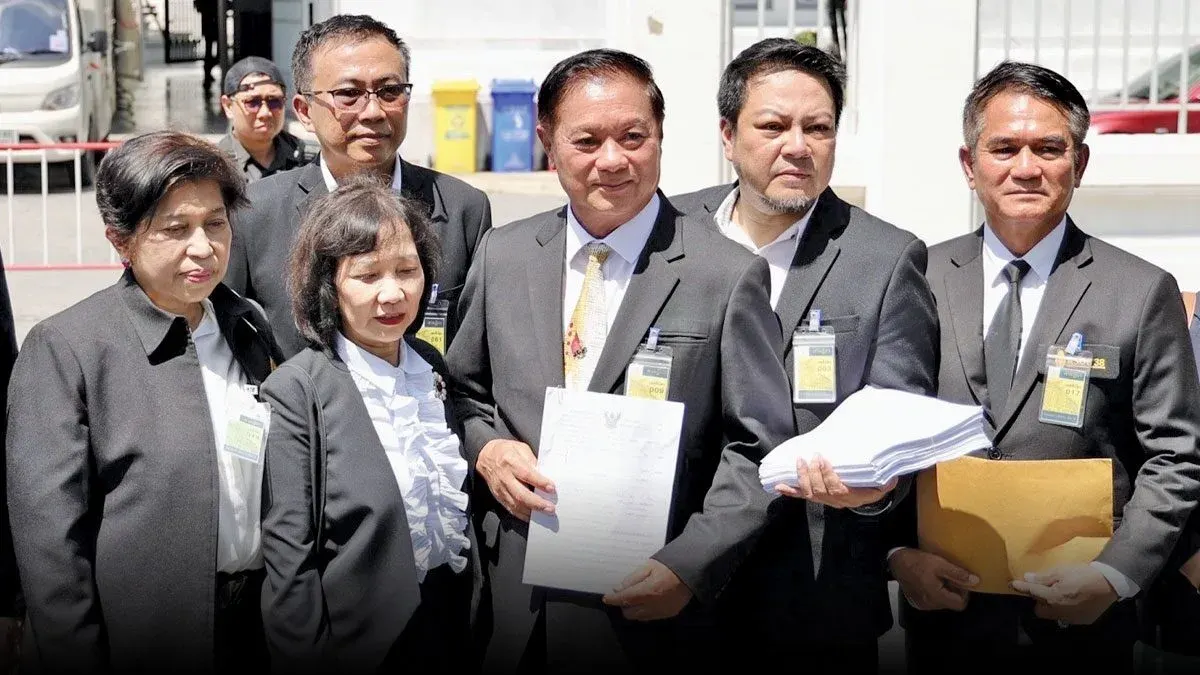
Although the Election Commission has handed the case over, it is not the final chapter in the disputed senate election. Reserve senate candidates have invoked Section 44 of the Constitution Act on Senate Member Selection to file an appeal with the Supreme Court's Election Division.
Section 44 of the Constitution Act allows district-level candidates or eligible voters at provincial and national levels to challenge the Election Commission's conduct, the election director, or officials if they believe their actions violate the law. They may file a petition with the Supreme Court within three days of an order being issued.
The reserve senate group adopted this approach after the Election Commission voted on September 14 to refer the matter to the Supreme Court, prosecuting only some of the 427 accused individuals. The petitioners—reserve senate candidates and applicants—believe that the evidence in the case should be examined more thoroughly.
Most recently, the reserve senate group filed a petition with the Supreme Court's Election Division requesting a comprehensive investigation of facts and evidence related to the senate election. The critical point is not simply the number of people prosecuted, but rather the standards of proof and the scope of authority of each institution.
The reserve senate group contends that the Election Commission's review should consider the overall pattern and interconnection of the entire election process, not be limited solely to evidence proving criminal guilt of individual accused persons. Additionally, Section 62 establishes the principle of "credible evidence" for cases where elections may not have been conducted fairly or justly. Although Sithichoke Intrawisai, a minority member of the Election Commission, stated that the Commission's resolution has already passed and cannot be changed, if the matter enters the Supreme Court and the court examines all evidence, any remedy would depend on the court's discretion.
This means the disputed senate election case is no longer under the sole control of the Election Commission, but is now entering judicial review. The Supreme Court's Election Division has accepted the petition for filing. What must be watched closely is whether the court will accept the petition under Section 44 or not. If it does accept, what boundaries will the court set for reviewing the Election Commission's resolution and evidence? And how will the court's proceedings affect the status of the accused senate members and the legitimacy of the process by which the current senate was formed?
Therefore, the Election Commission's resolution of September 14 is only a conclusion at the Commission level, but is not yet the final conclusion. It is not yet the final answer as to how fairly and justly the process of obtaining the current senate was conducted.
From this point forward, society must monitor the outcome of Section 44 of the Senate Selection Constitution Act, which may serve as an important avenue for the disputed election case to proceed further, in service of true justice.