Ta Reau Community Opposes Chemical Fertilizer Plant
Ta Reau District residents in Ayutthaya are opposing a permit to build a chemical fertilizer plant and expand a riverside pier, citing environmental damage, health risks, and traffic concerns in their community.
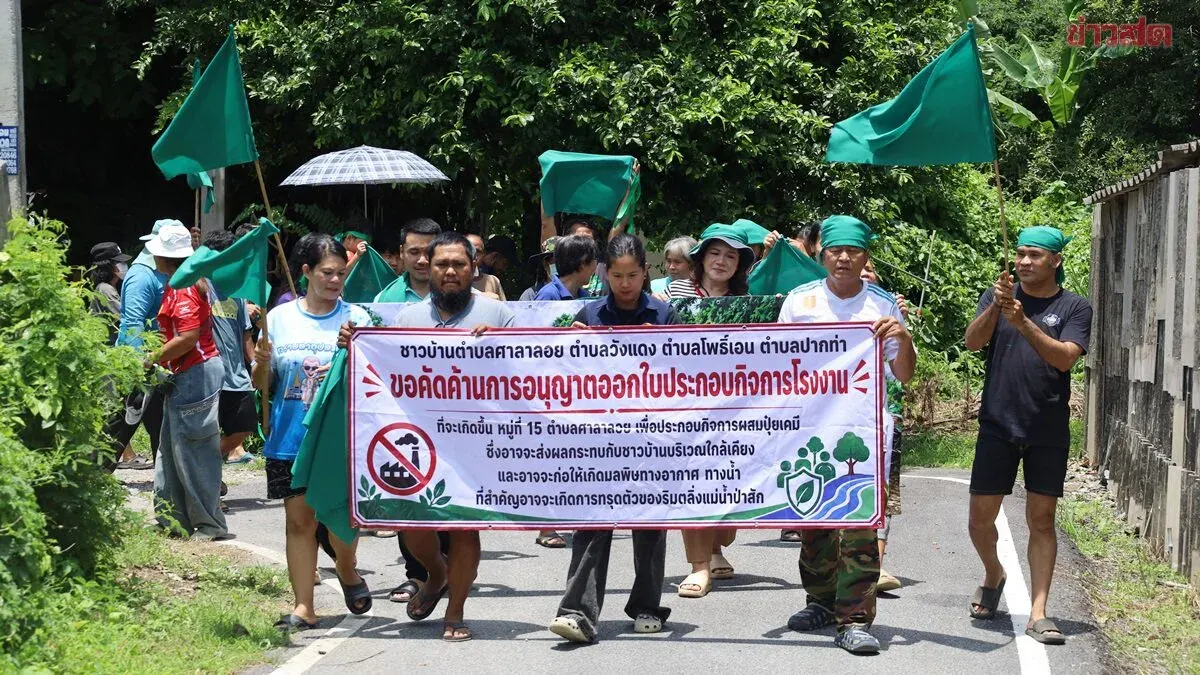
Residents of Ta Reau District, Ayutthaya Province, have united in opposition to a permit application to establish a chemical fertilizer factory and expand a riverside pier along the Pasak River, citing concerns over environmental damage, public health, traffic congestion, and threats to community life.
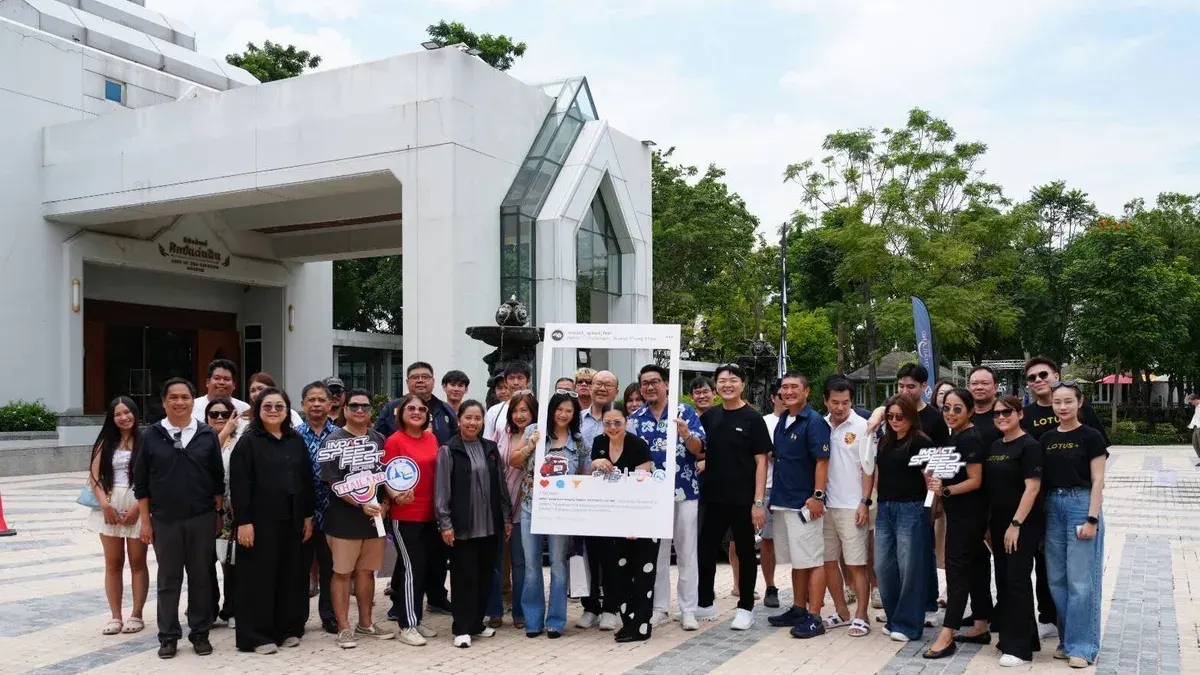
On September 6, 2026, local officials including Achumsai Tangintrak, a provincial council member for Ta Reau District, alongside an assistant to the Ayutthaya MP for District 2, the sub-district mayor of Salalom, sub-district council members, village leaders, and residents displayed their position by creating and distributing green flags and ribbons to affix to home fronts, vehicles, and motorcycles. Vinyl banners were installed conveying the community's opposition to the fertilizer plant and pier expansion in Salalom Sub-district, Ta Reau District. Green was chosen as a symbol of protecting the community's green spaces and environment. Community-wide campaigns were also organized to rally public support and raise awareness of potential impacts.
Achumsai explained that the site under consideration is a former rice mill and rice storage warehouse that ceased operations. A new operator plans to convert it into a fertilizer business involving production or storage, including transport of chemical fertilizer by river vessel to the pier for offloading onto trucks for distribution. The operator also plans to improve the pier to handle larger cargo volumes, applying for a Class 3 industrial factory license and requesting pier expansion approval from the Port Authority.
Following community meetings and information sessions on the project, residents expressed serious concerns about odors, dust, chemical contamination risks from production and storage, and increased river traffic. Because the site sits on the Pasak River where boats and cargo handling already occur, residents fear that larger or more frequent vessel traffic could damage riverbanks and riparian areas. Heavy truck transport of fertilizer through the community could increase traffic volume and accident risks.
Visruth Pansan, a Salalom Sub-district council member, stated that residents are deeply concerned about licensing a Class 3 industrial fertilizer factory, fearing environmental and quality-of-life impacts including odor, dust, and chemical pollution from production and storage. Beyond environmental worries, residents also fear traffic and accident hazards, noting that the facility's internal space may be insufficient for large trucks, potentially forcing vehicles to park roadside and endangering public passage and safety. The community includes elderly residents, young children, and people with health issues who could be directly harmed by dust, odors, or pollution. The site was formerly a large rice mill and warehouse, and residents already experienced impacts from heavy truck traffic, noise, and pest problems in the past and do not want these issues to recur, especially with an operation that may cause greater harm.
Residents emphasized that their area is a green zone, a rural agricultural community with fresh air, and they do not want industry to destroy it. Community leaders and residents remain unified in opposing the industrial and chemical fertilizer factory.