Thailand Orders Forest Reform in Nan Highlands After Erosion Risks Found
Thailand's environment minister ordered forest reform in Nan's highlands after surveys found steep agricultural plots risking severe erosion and landslides during heavy rains. Authorities will require farming communities to adopt watershed
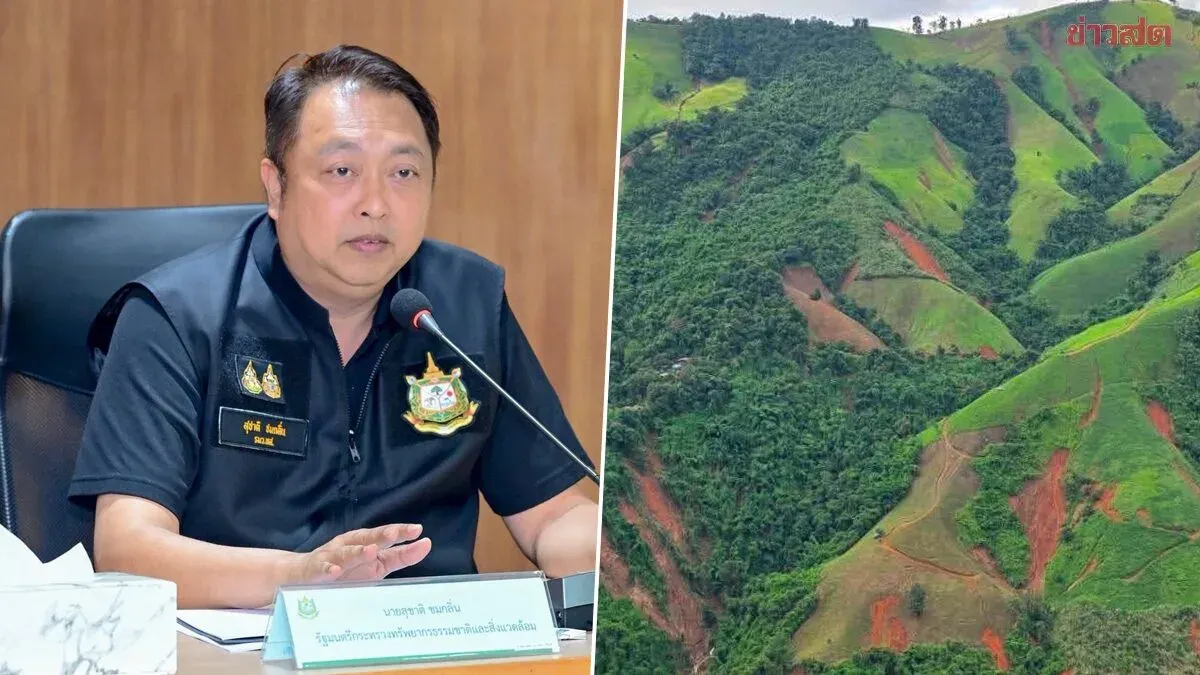
Natural Resources and Environment Minister Suchat Chomklin revealed on August 23 that he received a report from Arttapon Charoenchanasa, Director-General of the Department of National Parks, Wildlife and Plant Conservation, following a helicopter survey of the upstream area in Pua District, Nan Province, which was hit by heavy rain, landslides, and road closures. Multiple villages required emergency supply drops by helicopter. The survey found agricultural plots on steep, high-elevation terrain within the national forest reserve where corn was planted nearly to the hilltops. These steep upstream areas face severe risk of soil erosion and water runoff during heavy rainfall. Suchat ordered the Department of Forestry to urgently meet with communities and reinforce that agricultural permits come with strict conditions and rules. He stressed that permission to live and farm does not mean unlimited land use, especially in upstream and steep zones requiring soil and water conservation measures. Suchat stated: "I have instructed the Department of Forestry to quickly engage with the people and make clear that areas the state permits for farming have conditions and rules that must be followed—particularly planting native forest species, maintaining soil, and shifting from single-crop highland agriculture to agroforestry that preserves watershed systems." According to local data, Ban Khun Goon is a traditional community where people have long lived and farmed. Some now operate under state land allocation programs across three sub-watersheds with 11 communities covering at least 4,000 rai, mostly growing corn. A few areas, such as Moo 2 in Phu Kha Subdistrict with 37 households, have begun transitioning to coffee and higher-value crops. Suchat clarified: "We do not view all indigenous residents as encroachers, but once the state designates farming areas, they must follow the conditions and rules—particularly watershed management through tree planting, terracing, reduced pesticide use, and soil and water conservation. These are responsibilities everyone must share." He stated that the recent flash floods and landslides in Nan must serve as a critical lesson for managing highland areas, requiring careful assessment of which zones should be farmed, which restored to forest, and which suited to appropriate agriculture. The minister ordered the Department of Forestry to systematically survey and map highland areas while building public understanding of the importance of perennial trees, reduced monoculture, and cash crops compatible with forest species—such as coffee, cocoa, avocado, and fruit trees—to generate income alongside conservation.