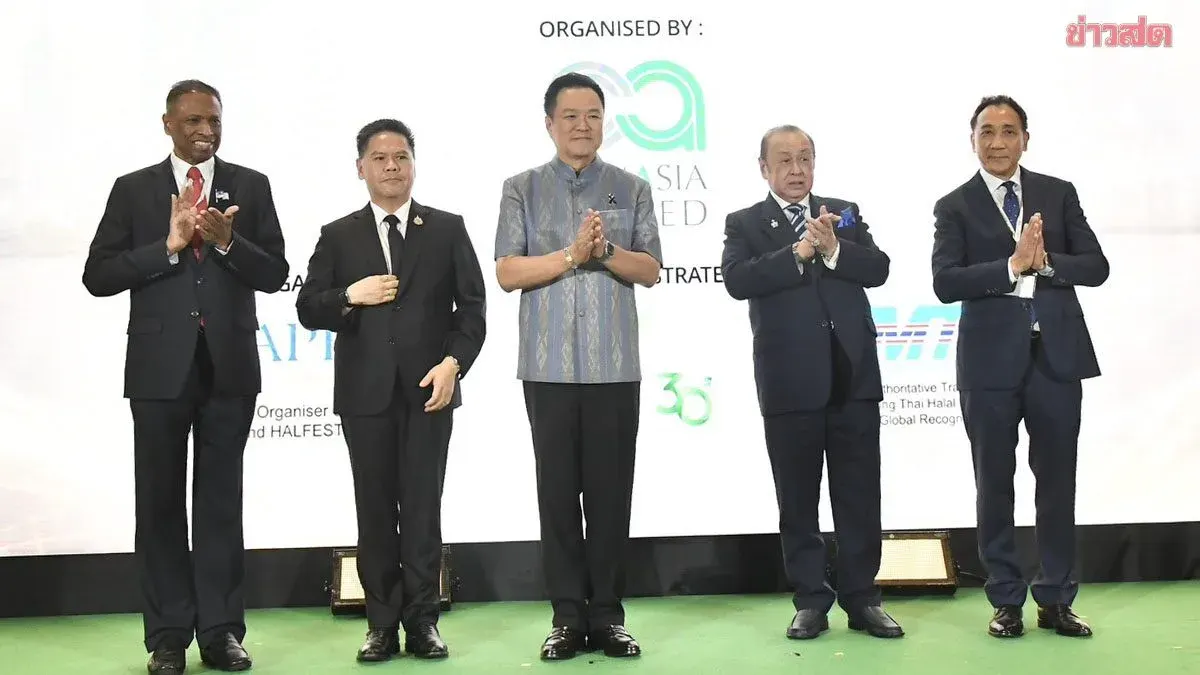
Thailand opened Mega Halal Bangkok 2026 to position itself as ASEAN's halal economic hub, leveraging its food industry reputation to meet growing global demand for trusted, certified products. Prime Minister Anusit Chanyawiwatkul emphasized
Prime Minister Anusit Chanyawiwatkul officially opened Mega Halal Bangkok 2026 to position Thailand's halal industry as the center of ASEAN's economic development, reinforcing its role as the world's kitchen. The ceremony took place at 11 a.m. on July 15, 2026 at Hall 8 of the Sirikit National Convention Centre.
The Prime Minister stated that the event occurs during a period of major global economic transformation caused by climate change, geopolitical uncertainty, and supply chain instability, which are reshaping the world food landscape and making food security a crucial challenge. He noted that consumers today demand greater scrutiny of their purchases, seeking to know product origins, production methods, and trustworthiness. Consequently, "trust" has become one of the most economically valuable factors, encompassing confidence in quality, standards, safety, and the producers behind products—all values reflected in the halal economy.
Anusit explained that halal has evolved far beyond a religious certification mark and become an internationally recognized standard encompassing quality, integrity, traceability, and consumer confidence—benefits that extend beyond Muslim consumers to anyone seeking assurance in their purchases.
The halal economy is one of the world's fastest-growing sectors. For Thailand, this represents more than an expanding market opportunity; it is a chance to strengthen the nation's food system, build high-value industries, support farmers and entrepreneurs, and contribute to global food security.
Thailand has long been recognized as the "world's kitchen," and today it is building on this strength toward a broader vision: becoming a "Trusted Global Food Security Partner" capable of supplying food, products, and services that people worldwide can rely on. The halal economy stands as a key pillar of this vision.
Thailand is also well-positioned to become ASEAN's halal economic hub and a bridge between Southeast Asia and the Muslim world, leveraging its strategic location, promising food industry, world-class manufacturing standards, internationally recognized healthcare and medical sectors, and modern transportation infrastructure.
The Prime Minister emphasized that being a hub depends not solely on geography but on trustworthiness, consistently high standards, and strong cooperation. Thailand is therefore investing continuously to upgrade halal standards, advance scientific research, strengthen certification systems, improve logistics and digital trade, and drive innovation.
Government support also extends to small and medium-sized enterprises (SMEs) and new entrepreneurs, enabling them to participate in the global halal economic value chain. The Prime Minister is confident that the halal economy's growth will benefit businesses of all sizes.
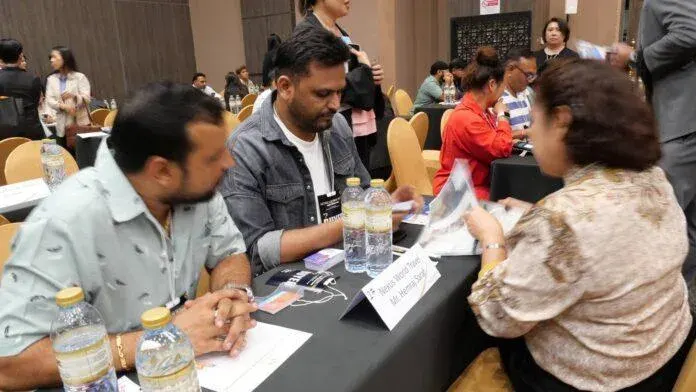
Anusit added that Mega Halal Bangkok is not merely a product exhibition.