Betong Chokes Under Toxic Haze as Health Officials Warn
The user wants a short summary (1-2 sentences, 120-220 characters, max 240) for a news article about hazardous haze in Betong, Yala province. The summary must be in English only, factual, no filler, lead with what happened then one key deta
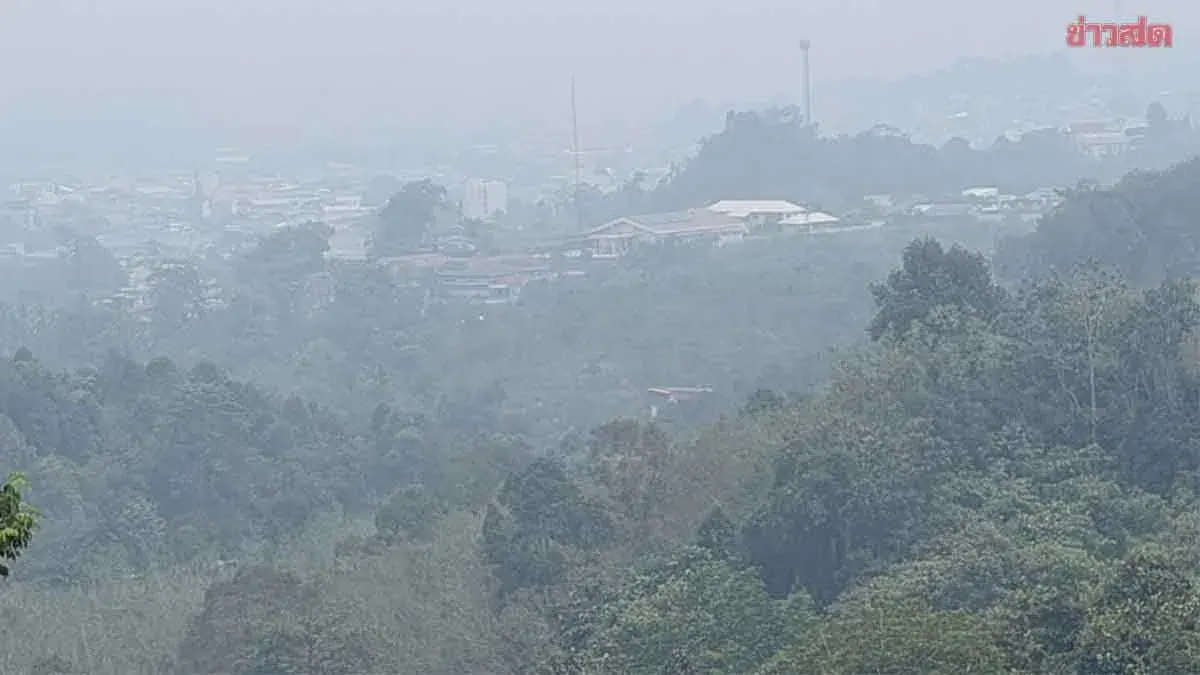
Betong in Yala province is experiencing hazardous smoke and dust that blankets the town, severely reducing visibility and impacting public health, with initial symptoms of eye irritation and nasal discomfort. Health officials warn of the dangers of pervasive PM2.5 and recommend wearing face masks. On October 7, 2026, at the viewpoint of the 72nd Anniversary Building of Her Majesty the Queen in Betong, thick white smoke was clearly seen covering the urban area, spreading across the sky and obscuring the town and surrounding mountains. Visibility has noticeably decreased, prompting drivers on city streets and Highway 410 between Yala and Betong to exercise extra caution. Residents are increasingly protecting themselves, with more motorcyclists wearing masks to keep dust out of their respiratory systems, correlating with reports of eye, nose, and throat irritation, especially among allergy sufferers. Local residents say they wake up feeling unrefreshed, find breathing difficult, and perceive the air as unclean, experiencing eye and nasal irritation, while expressing relief that no family members have allergies. Betong’s public health chief, Suppakit Phongphongphan, advises limiting outdoor activities, particularly for children, the elderly, and those with pre‑existing conditions or respiratory issues, and wearing masks capable of filtering fine PM2.5 particles if going outside is necessary, as the particles can enter the lungs and bloodstream, introducing harmful substances and raising long‑term health risks. According to air quality data, at 1:00 p.m. the Air4Thai website rated Betong’s air quality as good, with an average concentration of about 21 micrograms per cubic metre, while IQAir classified it as moderate, averaging around 29 micrograms per cubic metre.