Thai-Made Moon Science Device Joins Chang'e-7 Mission
Thailand's CE-7 MATCH instrument, developed by Thai engineers, will launch aboard China's Chang'e-7 lunar mission on August 24, 2025, marking the country's first participation in an international moon exploration program. The device will me
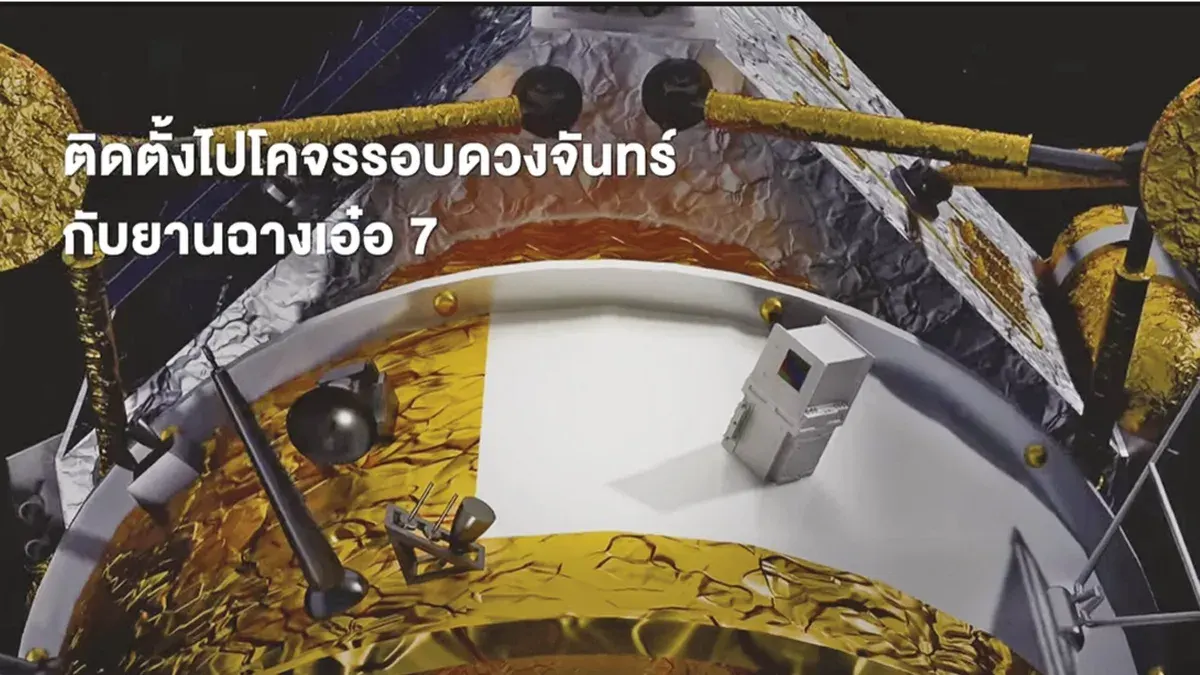
Thailand is sending the CE-7 MATCH scientific instrument, designed and developed by Thai engineers, to participate in a lunar exploration mission for the first time as part of the Chang'e-7 mission. The launch is scheduled for August 24, 2025 at approximately 7:00 a.m. Bangkok time from the Wenchang Space Launch Center in Hainan, China (timing subject to weather and engineering conditions). This marks a significant milestone for Thai science and space research, demonstrating the country's capabilities in space technology development, engineering, and advanced research recognized internationally. The National Astronomical Research Institute of Thailand (NARIT) under the Ministry of Higher Education, Science, Research and Innovation has announced that CE-7 MATCH will carry out lunar exploration as one of seven international scientific instruments on the Chang'e-7 mission. The institute is coordinating with the Ministry of Education, Thai PBS, and Sea Thailand to broadcast the Long March-5 Y14 rocket launch on August 24, 2025, and to conduct science, engineering, and space technology education activities nationwide. CE-7 MATCH (Moon Aiming Thai-Chinese Hodoscope) is a scientific instrument jointly developed by NARIT and Mahidol University under Thai-China cooperation for the International Lunar Research Station (ILRS) project. It was selected as one of seven international scientific instruments to orbit the moon after passing rigorous evaluation. The instrument's mission is to measure cosmic radiation and high-energy particles in space, and to study the relationships between the sun, Earth, and moon to understand the sources and generation processes of radiation that may affect humanity in the future, particularly to establish knowledge foundations for long-term space exploration and lunar settlement. Deputy Prime Minister and Minister of Higher Education, Science, Research and Innovation Anucha Nakasai stated that the success of CE-7 MATCH results from continued investment in science, research, and innovation, including human resource development and knowledge creation, as well as collaboration between research institutions, universities, and international partners. This has enabled Thailand to advance its high-technology capabilities by building on existing knowledge to create Thai-developed knowledge and technology, enhancing competitiveness and creating new economic opportunities. The government aims to transform Thailand from a technology user to a technology creator by using Thai knowledge as a foundation for innovation that generates economic value while developing human capital, supporting advanced research, and promoting the space industry as one of the country's new growth engines, since investment in science and technology is investment in the future and creating indigenous technology is essential for long-term national development.