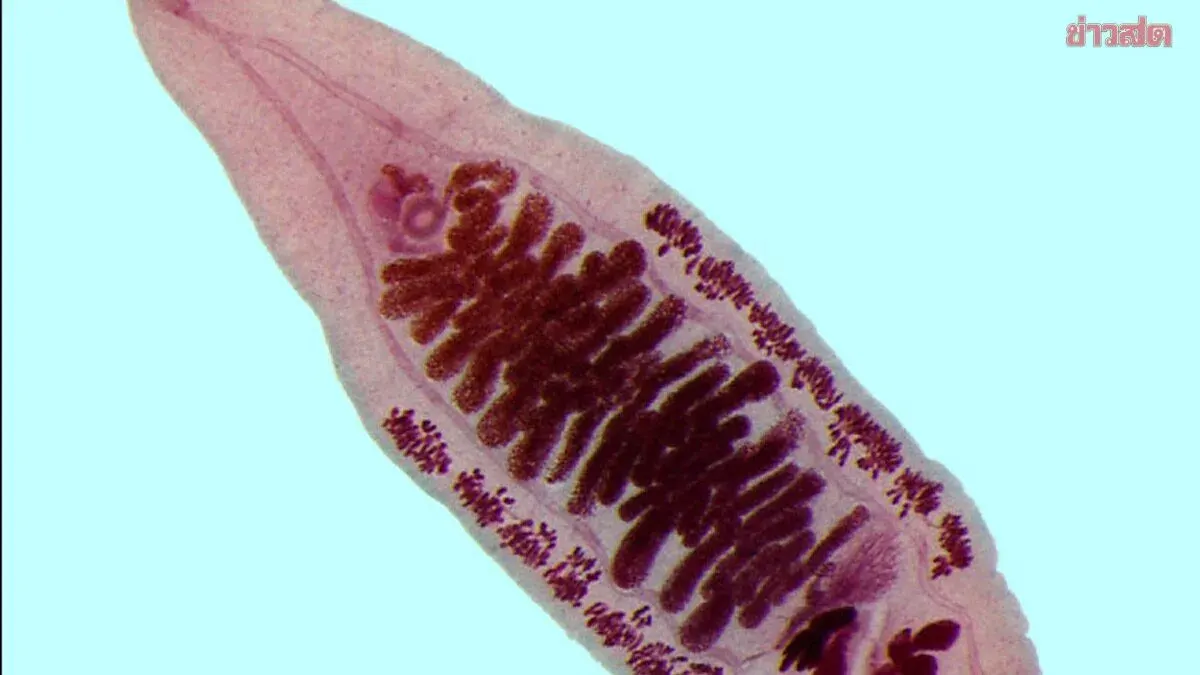
Only 4 confirmed liver fluke cases were found among 2,200 screened students in Maha Sarakham Province, though initial testing flagged 451 positives. Thailand's infection rates have declined significantly since 2016, but the parasite remains
On July 15, Dr. Wicharn Bounkittikul, director of the Department of Disease Control's epidemiology division, announced screening results for liver fluke infections among university students in Maha Sarakham Province. Of 2,200 students screened using urine test kits, 451 tested positive; however, laboratory confirmation using Modified Kato Katz and FECT techniques on 309 stool samples found only 4 confirmed cases of liver fluke infection.
The screening also detected other parasites, including 4 cases of intestinal fluke, 5 cases of roundworm, 2 cases of hookworm, and 1 case of whipworm. The Department of Disease Control will only provide deworming medication to patients with confirmed positive results and plans to collaborate with the Department of Medical Sciences to refine urine test kit procedures.
Dr. Wicharn noted that Thailand's overall liver fluke situation has improved steadily, with infection rates among people aged 15 and older in high-risk areas declining from 16.27% in 2016 to 2.53% in 2024. However, the Northeast and Northern regions remain under close surveillance. In 2024, the department screened 240,220 people and treated 6,074 confirmed cases.
Dr. Yongjeurh Lersirithawaror, director of the general communicable disease division, explained that liver fluke is a "silent threat" that can remain dormant in the body for 20–30 years, initially causing no symptoms. The parasite's larvae live in the flesh, scales, and fins of freshwater fish; consuming undercooked fish allows larvae to mature in the bile ducts, causing chronic inflammation and increasing the risk of bile duct cancer by 5.5–6.4 times compared to uninfected individuals.
Prevention measures include eating only thoroughly cooked freshwater fish, avoiding raw or undercooked fish dishes, selecting fermented fish products from regulated producers, and seeking screening if you have a history of consuming raw fish or live in high-risk areas. Dr. Yongjeurh also warned that widespread misconceptions—that lime juice, chili, pickled foods, or alcohol kill the parasite—are false and offer no protection.