Lam Takhong Reservoir Hits 70% Capacity Awaiting More Rain
Lam Takhong Reservoir in Nakhon Ratchasima has risen to about 71 percent capacity after heavy rains filled it with water from Khao Yai’s forested hills. Officials say the reservoir still has nearly 100 million cubic metres of spare capacity and must continue to supply water to five districts for domestic, industrial and agricultural use. Rainfall is expected to increase again from October 5 to 8, prompting close monitoring of inflows.
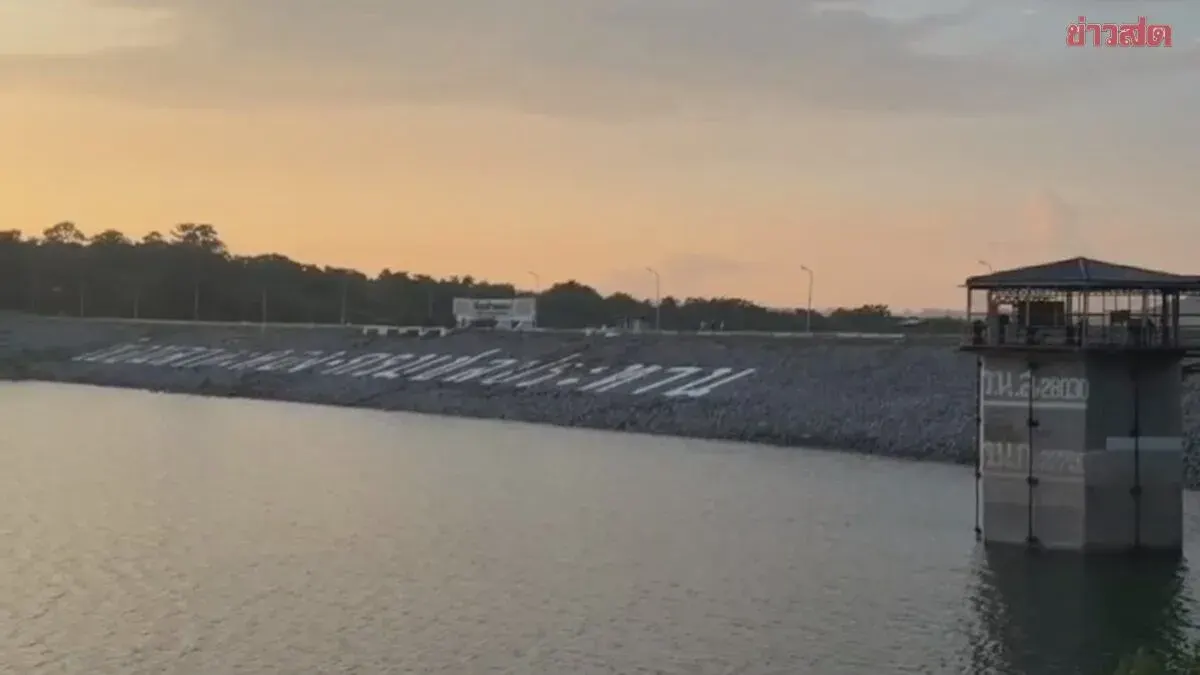
Heavy rain over several days has sent water from Khao Yai's forested hills into the Lam Takhong Reservoir, raising its storage to about 70 percent. On October 1, 2026, reporters tracking the latest water storage found the reservoir holding 222.73 million cubic metres, or 70.82 percent of its total capacity of 314.49 million cubic metres. This level falls within the normal “moderate” range, leaving almost 100 million cubic metres of spare capacity. Compared with the same period last year, when storage was only 32 percent, this year’s level is more than double.
The reservoir still has to supply water to five districts in Nakhon Ratchasima for tap‑water production, ecosystem maintenance, industry and agriculture, with agriculture during the rainy season relying mainly on rainwater.
Other large reservoirs in the province have also seen increased storage. Lam Phra Phloeng Reservoir in Pak Thong Chai district held 40 percent of its capacity at this time last year but now holds 82 percent, more than double. Lam Mun Reservoir in Krong Buri district rose from 51 percent last year to 56 percent this year. Lam Chae Reservoir in the same district decreased from 73 percent last year to 60 percent this year. Officials are closely monitoring the water situation, expecting further inflows into each reservoir.
Overall, the four large reservoirs and 25 medium-sized reservoirs across Nakhon Ratchasima together store 792.81 million cubic metres, or 64.71 percent of total capacity. Of this, 727.56 million cubic metres (62.73 percent) is usable water.
The Meteorological Department forecasts that from October 5 to 8, 2026, Thailand will see increased rainfall in many areas, beginning in the Northeast and North, after which the Northeast will experience cooler temperatures. Relevant agencies must continue to monitor rainfall and inflow to each reservoir, especially water from the forested watershed of Khao Yai National Park and the Pak Chong district that will flow into Lam Takhong Reservoir during this new rain pulse, which the reservoir can still accommodate.