The Life and Legacy of Luang Pho Plian of Chai Mongkol Temple
Luang Pho Plian served as abbot of Chai Mongkol Temple in Samut Sakhon for decades, beginning his monastic life in 1908 and becoming renowned for subduing a sacred crocodile through spiritual power. The temple was renamed from Hua Ta Kae Te
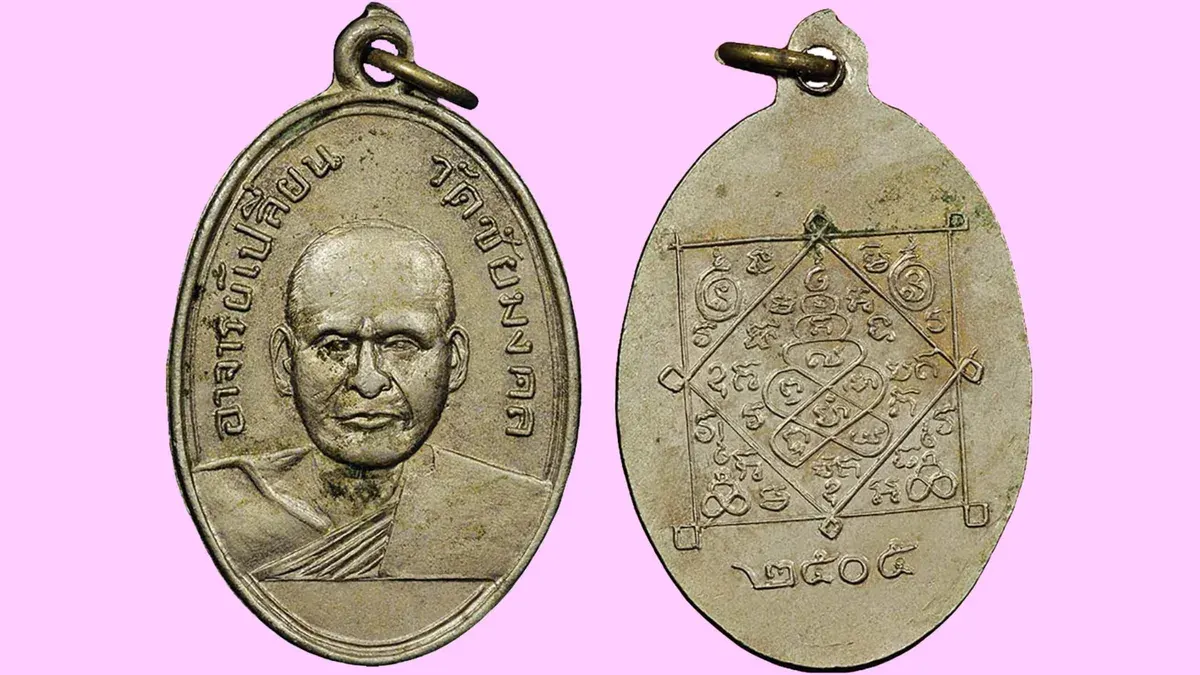
Luang Pho Plian Kantaseelo, also known as Phra Kru Sakorn Silachar, was the former abbot of Chai Mongkol Temple in Chai Mongkol subdistrict, Mueang district, Samut Sakhon province. Born as Plian Kongthin on November 3, 1890, in Ban Koh village, he came from a family of eight children. At age 18 in 1908, he became a novice at Koh Temple to pursue religious education. At age 20 in 1910, he received full ordination with senior monks serving as his preceptors and teachers, receiving the monastic name Kantaseelo.
He spent six rain retreats at Koh Temple before transferring to Khlong Khru Temple for seven more retreats. In 1923, he became abbot of Chai Mongkol Temple, originally called Hua Ta Kae Temple. The temple's name and history are connected to a legendary crocodile incident. According to local accounts, villagers from Maha Chai wounded a large crocodile with a golden axe that could not be killed by conventional means. Locals believed it was the sacred crocodile of Luang Phu Tao Kao Yot, a renowned master monk. They invited Luang Pho Plian, a disciple of Luang Phu Tao Kao Yot, to subdue the creature.
Upon arrival, Luang Pho Plian performed a meditation ritual, and the crocodile emerged from the water with the golden axe still embedded in its head. Using his spiritual power, he caused the animal to fall asleep and extracted the axe, discovering four directional sacred marks on its head—tattoos placed there by Luang Phu Tao Kao Yot. The crocodile subsequently died from its wounds. Following these events, the man who threw the axe died, and others involved in the hunt fell ill, attributed to the crocodile's spiritual power. A ritual was performed to pacify the spirit, and a shrine was erected. The shrine was later relocated to the temple's rear area. The original settlement became known as Ban Hua Ta Kae (Crocodile Head Village), and the temple was named Hua Ta Kae Temple. When Luang Pho Plian later renovated and expanded the temple, he renamed it Chai Mongkol Temple for auspiciousness. The village was also renamed Chai Mongkol Village, though older residents still call it Ban Hua Ta Kae.