How SMR Passive Safety Systems Handle Emergencies
Small modular reactors use passive safety systems that automatically cool the reactor core through gravity and natural circulation even during complete power outages, eliminating the need for emergency generators or human intervention.
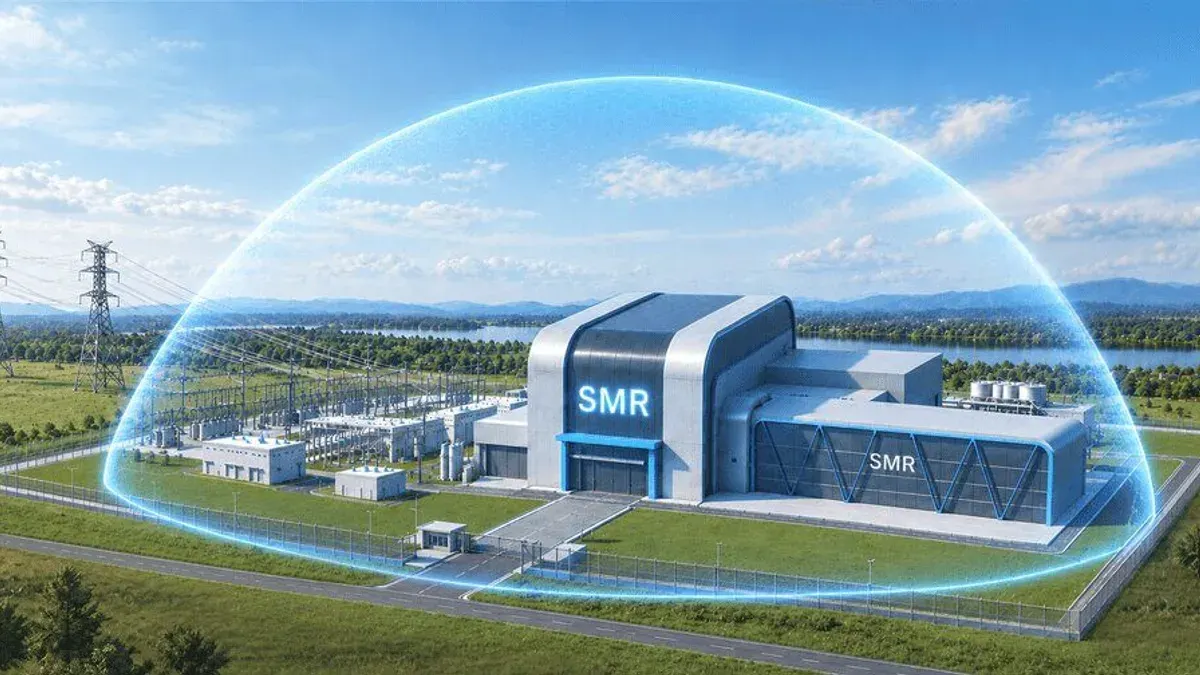
When people think of nuclear power plants, many worry about safety, especially during emergencies like earthquakes, tsunamis, floods, or complete power outages. Small Modular Reactors (SMR) are designed to address these weaknesses with a core feature: passive safety systems that operate continuously even when main power fails.
SMR passive safety systems work automatically using natural principles such as gravity, heat convection, and natural circulation, requiring no external power and no human intervention. The four key operational principles are: automatic shutdown (control rods drop by gravity into the reactor core to stop the nuclear reaction instantly without electricity); natural circulation cooling (as water around the reactor core heats up, it rises and allows cold water to flow down, creating continuous heat transfer cycles that maintain safe temperatures for days); gravity-fed emergency cooling (water from an elevated reserve tank flows down to the reactor by gravity alone, requiring no electric pumps); and continued safety during blackouts (the passive safety system automatically dissipates residual heat, maintaining safe temperatures for extended periods without staff or external power).
SMR's smaller size reduces system complexity and accident risk, lower energy density makes heat removal faster and easier, and emergency planning zones cover only about 1 kilometre around the plant fence, compared to 16 kilometres for conventional nuclear plants.
Beyond passive safety, SMR also features "defense in depth" with multiple protective layers: fuel pellets with ceramic surfaces that contain radiation; fuel cladding that seals pellets tightly; reactor vessels made of specially thick steel to withstand high temperature and pressure; and a containment building of reinforced concrete 1.5–2 metres thick to shield radiation and protect against external natural disasters.
Thus, safety is not merely an emergency response measure but is built into every stage of SMR design.