Religious Panel Checks Dam, Temples to Prevent Phetchaburi Flooding
Thailand’s Parliamentary Committee on Religion, Arts and Culture inspected the Kaeng Krachan Dam and three historic temples in Phetchaburi to assess flood risks and protect cultural heritage ahead of the rainy season. Officials confirmed real‑time water monitoring, standby pumps and machinery, and emergency plans are in place, while urging residents along the Phetchaburi River to stay informed. The visit also highlighted coordination with the Fine Arts Department to safeguard temple artifacts from potential inundation.
On October 6, 2026, Thiwarat Angkanan, MP for Phetchaburi and chair of the House Committee on Religion, Arts and Culture, along with Chaiya Angkanan, president of the Phetchaburi Provincial Administrative Organization, visited the Kaeng Krachan Water Supply and Maintenance Project in Kaeng Krachan District to review the water situation. Kreksak Linanont, director of the project under the 14th Irrigation Office of the Royal Irrigation Department, briefed them on overall water conditions and preparations for the upcoming rainy season.
Thiwarat said that government agencies and local administrations are fully ready, with the Royal Irrigation Department working continuously with the provincial office and community leaders. Water levels are monitored in real time, and pumps, machinery, and personnel are on standby 24 hours a day at risk points to swiftly manage and drain water from low‑lying areas should rainfall increase.
Although the overall water situation remains manageable and the dam level is stable, all parties have been urged to prepare the highest‑level contingency plans to ensure public safety. Thiwarat also urged residents, especially those living along both banks of the Phetchaburi River and in low‑lying areas, to follow official updates closely and avoid unnecessary panic, noting that authorities are fully prepared to respond quickly.
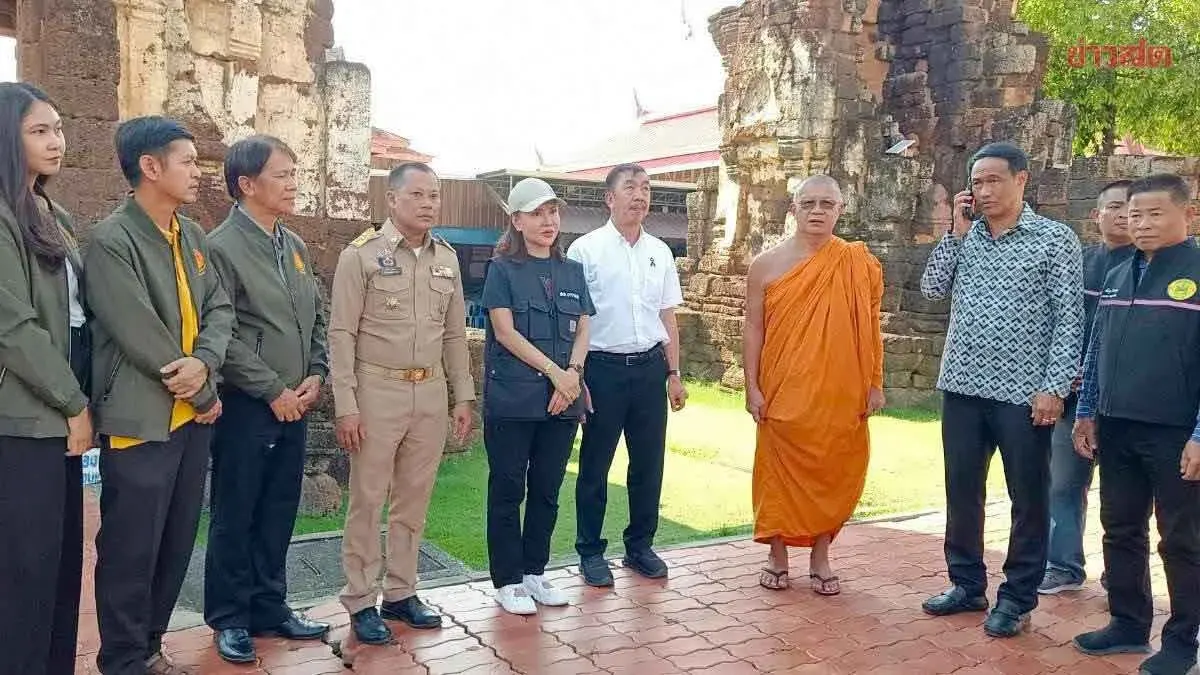
Later, Thiwarat, accompanied by Phetchaburi District Chief Sanan Ketthong and Phetchaburi City Mayor Kittipong Theppanich, inspected three registered historic temples: Wat Yai Suwannaram, Wat Kampang Laeng, and Wat Sa Bu. Officials warned that a rapid rise in river levels could cause prolonged inundation, endangering religious artifacts and valuable architecture within the temples.
Thiwarat stressed that prolonged flooding could damage the temples’ structures, art objects, and important items. As chair of the religion committee, she said the field visit aimed to gather risk information and develop preventive measures in advance, because these sites are heritage passed down from ancestors to the people of Phetchaburi and all Thais.
She emphasized that advance preparation is essential: water levels must be watched, drainage routes inspected, pumps and protective equipment readied, and clear coordination procedures established so agencies can act immediately if conditions change.
For protecting the historic sites and moving vulnerable artworks, coordination with the Fine Arts Department and experts is required to avoid harming the sites’ cultural value. Safety of the public, monks, and the preservation of artistic and cultural heritage must be balanced; while some damage can be repaired, loss of historical value may be irreversible.