Royal Thai Fashion Showcased at Tokyo National Museum
Royal Thai dress styles and traditional craftsmanship were showcased at Tokyo National Museum on September 17-18, with Princess Sirivannavari Nariruattana presenting eight royal dress styles and three men's shirts as living cultural heritag
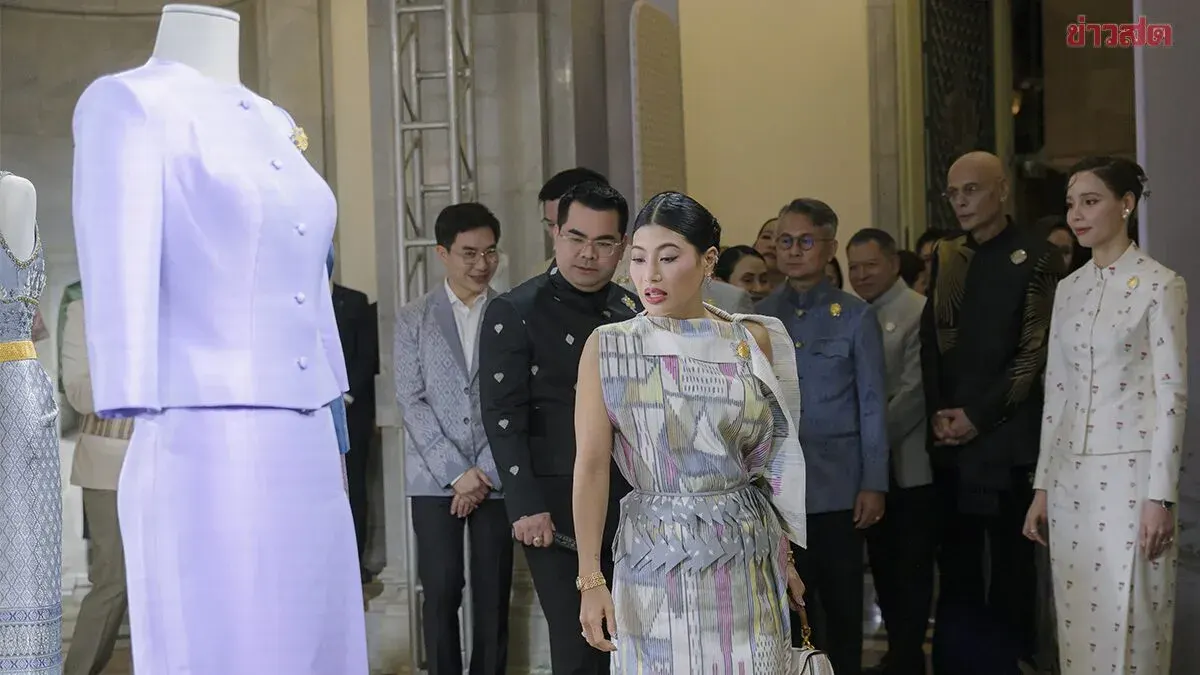
The Department of Cultural Promotion under the Ministry of Culture organized the event 'Chud Thai Knowledge, Craftsmanship and Practices of the Thai National Costume' on September 17-18, 2025 at the Hyokeikan, Tokyo National Museum in Japan. This represents an important cultural landmark reflecting the vision of establishing Thai dress as global knowledge. On September 18, 2025, Princess Sirivannavari Nariruattana presided over presentations of all eight royal Thai dress styles and three royal dress shirts for men. The event also showcased demonstrations of traditional Thai jewelry creation and other fine crafts, including ancient textile techniques, gold and silver work, and auspicious silk patterns. All activities were presented as contemporary design reflecting artistic structure—not merely historical objects, but living heritage that continues to develop.
The foundation for bringing Thai dress knowledge to the global stage stems from the vision of the late Queen Sirikit, who was dedicated to preserving and promoting Thailand's cultural and artistic heritage, particularly traditional Thai dress as a key national identity. Through her scholarly research into the history of Thai women's clothing across different royal court periods, she worked with experts to develop the 'Royal Thai Dress' as a standard of elegant, culturally appropriate attire suitable for modern Thai society and international royal duties.
Royal Thai Dress comprises eight styles: Ruen Ton, Chitralada, Amarin, Borompiman, Dusit, Chakri, Shivalai, and Chakrapardi—each named after royal residences and palaces. Three additional styles of men's royal dress shirts were also developed. Throughout her reign, the late Queen championed these dresses as 'cultural media' to present Thailand's image internationally, particularly during state visits to the United States and Europe, notably the Netherlands in 1960. The dresses gained international recognition and collaboration with renowned French designer Pierre Balmain, who helped showcase the beauty of Thai silk through haute couture craftsmanship.
In 2024, the Cabinet approved submitting 'Thai Dress: Knowledge, Craftsmanship and Practices of the Thai National Costume' to UNESCO for consideration as an Intangible Cultural Heritage at the 21st Intergovernmental Committee meeting scheduled for December 2025.