Thai-German Project Cuts Air Conditioning Energy by 80% Using Typha Plant
A Thai-German research project has demonstrated that bio-based insulation panels made from cattail plants can reduce air conditioning energy consumption by up to 80 percent in traditional-style homes, tested at King Mongkut's Institute of T
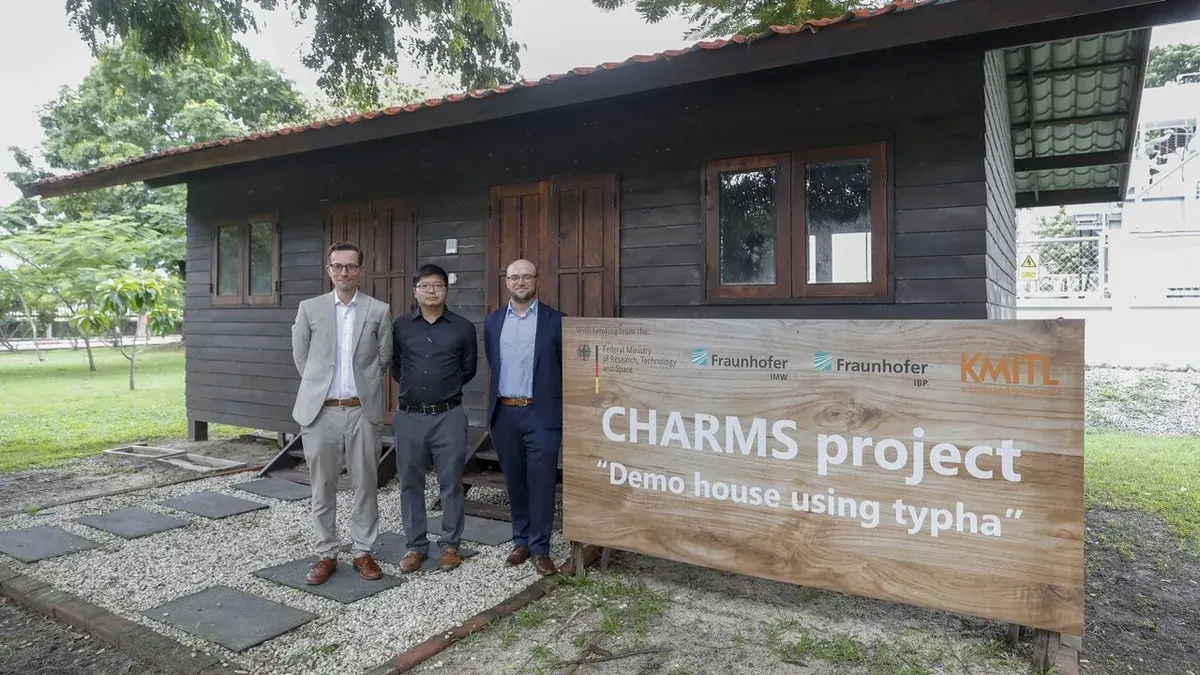
A major Thai-German international research collaboration called CHARMSbio has made significant waves in green architecture and sustainable building materials by launching the Typha Pilot House, a model home designed in the style of traditional rural Thai dwellings at King Mongkut's Institute of Technology Ladkrabang. The structure features bio-based insulation panels made from the cattail plant (Typha), which has been proven to reduce heat transfer and air conditioning energy use by up to 80 percent, transforming traditional Thai wisdom into a practical climate crisis solution.
The collaboration began with Henrik Beermann, Deputy Head of the Innovation Acceptance Unit at Germany's Fraunhofer Institute for Systems and Innovation Research, who approached the project through a cultural heritage management lens. Rather than simply preserving old wooden buildings for historical value, his vision was to restore them for practical daily use while harnessing their natural capacity to store carbon. This perspective shift led to the integration of new bio-based materials and the creation of innovative building solutions.
On Thailand's side, Associate Professor Natdanai Sinsamutropong from King Mongkut's Institute of Technology Ladkrabang led the effort to decode traditional Thai building wisdom, particularly the practice of elevating houses on high stilts to handle water level fluctuations. To conduct precise engineering tests without confounding variables, researchers built identical twin model houses with matching structures and exteriors, both equipped with high-resolution sensors to maintain equal environmental conditions. One house received Typha-based bio insulation while the other remained uninsulated for comparison.
After nearly two years of measurement across summer, monsoon, and rainy seasons, Jakob Richtmann from Germany's Fraunhofer Institute for Building Physics reported that the insulated room was noticeably cooler and more thermally comfortable. When the air conditioning was set to 22 degrees Celsius, the naturally insulated room achieved energy savings of 75–80 percent because the insulation maintained stable temperatures long enough to keep the air conditioning off for extended periods, while the uninsulated room required continuous operation.