Thailand Launches Geographical Indication Drive to Boost Global Trade
Thailand's Department of Intellectual Property sent six GI-certified agricultural producers to Singapore's food expo, generating 5 million baht in direct sales and expected trade value of 30 million baht through buyer matchmaking and digita
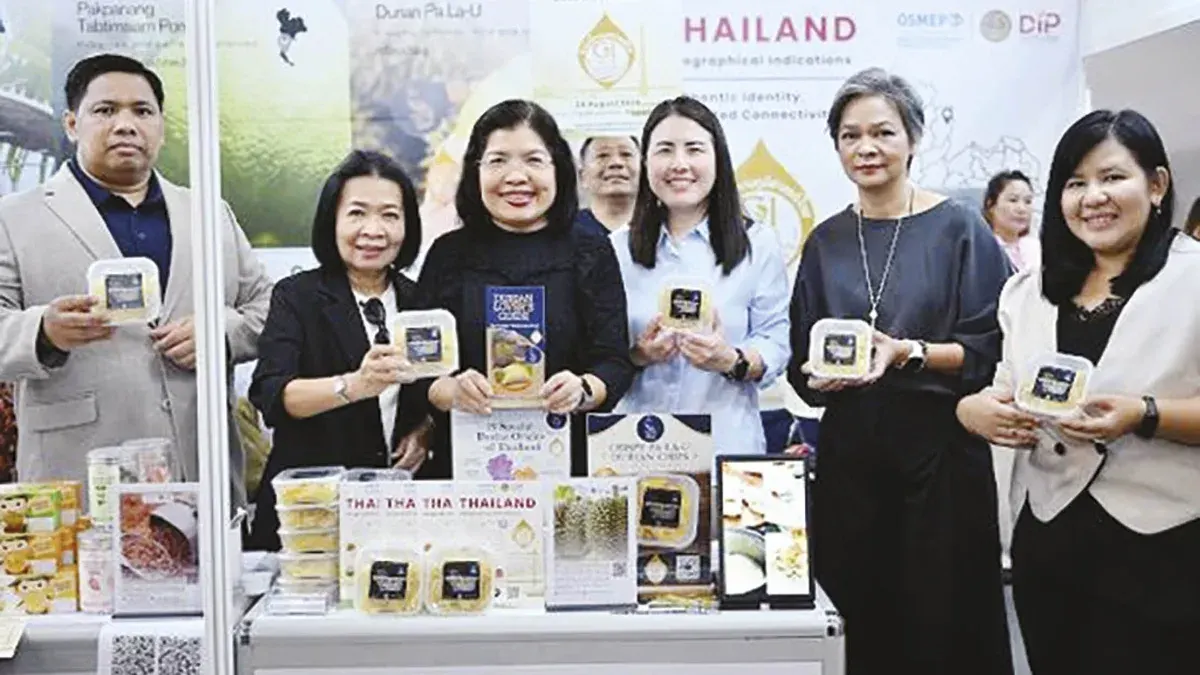
Geographical Indication (GI) certification has traditionally served as a mark confirming product origin and quality, but the Department of Intellectual Property under the Commerce Ministry is now expanding its role. The department is taking GI product entrepreneurs directly to foreign markets and trade partners to transform local identity into tangible commercial and economic opportunity.
The latest initiative involved sending six Thai agricultural and food GI producers to Singapore between August 21-24, 2026, for the APAC Food & Beverage Expo 2026 at Singapore EXPO. This gave GI entrepreneurs the chance to present products directly to consumers, while the department also organized business-matching discussions with 15 Singapore importers and buyers. Follow-up talks with Shopee and TikTok Singapore aimed to expand markets through digital channels.
The three-day market opening generated over 5 million baht in direct sales from the six participating producers. Business-matching sessions are expected to create trade value through both immediate and long-term purchase orders totaling at least 30 million baht.
From GI Mark to Market-Building Tool
Ormorn Saoptwithorn, director-general of the Department of Intellectual Property, said the department has promoted local identity products through GI as a key government and Commerce Ministry policy. The strategy aims to drive trade, tourism, and community economics by adding value, expanding markets, and connecting economic opportunities in both the short and long term.
The department's mission extends beyond product registration to commercially exploit the "community identity capital," particularly by creating new foreign markets. GI products offer more than just product quality—they tell the story of the place, origin, wisdom, and way of life of the producers.
Singapore was chosen as a target market because consumers there value quality, standards, and product origin, while also being familiar with Thai food and raw materials. Thailand currently has 269 registered GI products, with approximately 90% being agricultural goods. Many carry strong reputation and distinctive identity, positioning them in the premium market segment.
Six Entrepreneurs Open Markets to Buyers
The GI products brought to market included Pathum Thani sang-yod rice, Phaknang pomelo, Nan mountain salt, Photharam chai-po, Ban Phaew fragrant coconut, and Pa La-u durian. Each has distinctive characteristics from its geographic production origins and carries a story that serves as a selling point in foreign markets.
During the three-day Singapore EXPO event, there was continuous interest from visitors and buyers. Phaknang pomelo and Photharam chai-po were the most popular items, driving sales to 5 million baht. More importantly, producers directly observed foreign consumer behavior—their interest in products, price levels, and product and packaging formats—information they can use to adjust strategy before serious market expansion.
On August 24, the department brought all six producers to a Business Matching forum with 15 Singapore importers, buyers, and business operators at the Thai Trade Promotion Office in Singapore.