Thailand Launches Regenerative Tourism Initiative with Universities
Thailand's government and universities have partnered to promote regenerative tourism that balances economic growth with ecosystem restoration and community benefits, launching four pilot projects across the country including the Phi Phi Is
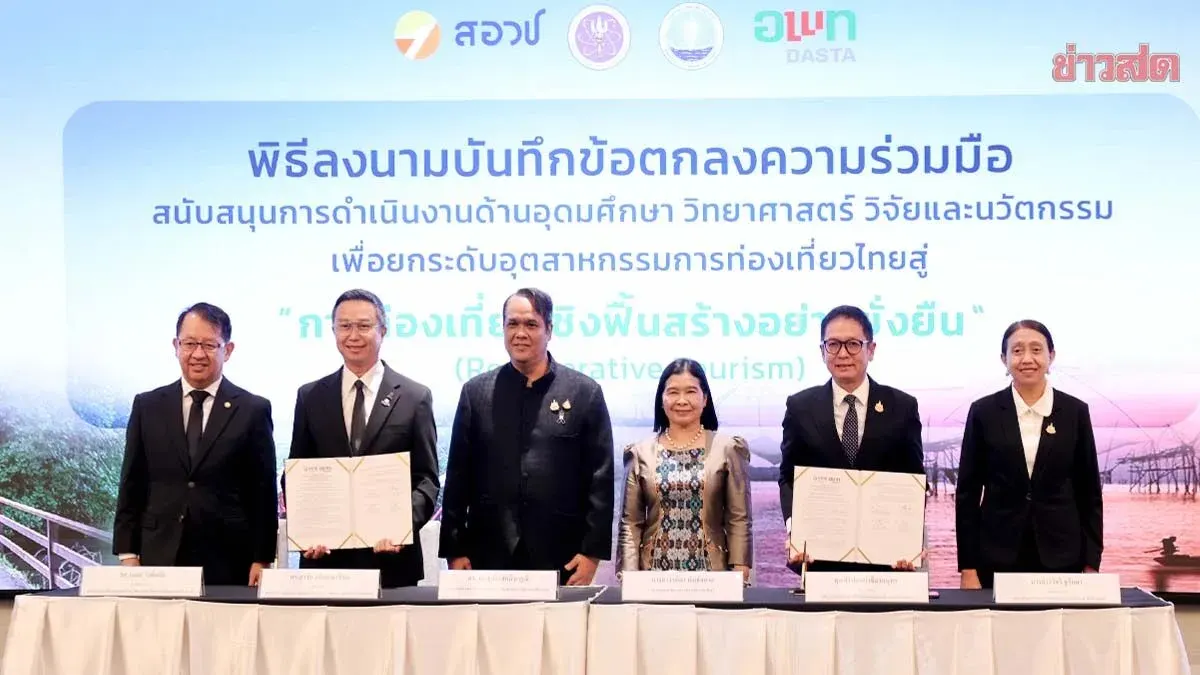
On September 11, 2025, the National Higher Education Science Research and Innovation Policy Office signed a memorandum of understanding with the Special Tourist Area Development Organization to advance Thai tourism toward regenerative tourism. The agreement was signed by Surchai Satitkunarakhan, director of the policy office, and Siripakorn Cheawsamut, director of the development organization, witnessed by deputy permanent secretaries from both the higher education and tourism ministries.
The collaboration seeks to apply higher education knowledge, research, and innovation to develop and expand results in the organization's special tourist areas while linking communities, businesses, and stakeholders. It aims to establish international-standard metrics to drive tangible regenerative tourism outcomes that elevate Thailand as a meaningful and high-value destination where tourism creates economic value while restoring ecosystems and improving community quality of life.
The initiative integrates higher education science research and innovation with the education ministry's "Future Link" concept and the tourism ministry's "Community Plus" policy to strengthen community capacity and private sector engagement. Four pilot Living Lab areas were proposed: the Phi Phi and Chang islands, the Songkhla Lake basin, Chiang Rai, and the Bang Kachao estuary.
The two organizations established four main collaboration frameworks: policy development that shifts from resource preservation to ecosystem restoration using science-based mechanisms; structural and network implementation linking universities, research institutions, government, and private sector while developing a Regenerative Tourism Lab; tool and measurement system development with science-based criteria; and capacity building for communities and entrepreneurs through knowledge networks and best-practice guidelines tailored to Thai contexts.