Guide to Driving Safely Through Thailand's Flood Waters
Severe flooding across Thailand, including Bangkok, has caused widespread damage and left many vehicles stranded. The article offers practical advice for motorists on how to assess flood depth, drive safely through water, and what to do if a vehicle stalls. It also highlights special precautions for electric vehicles and steps to prevent electrical damage after water exposure.
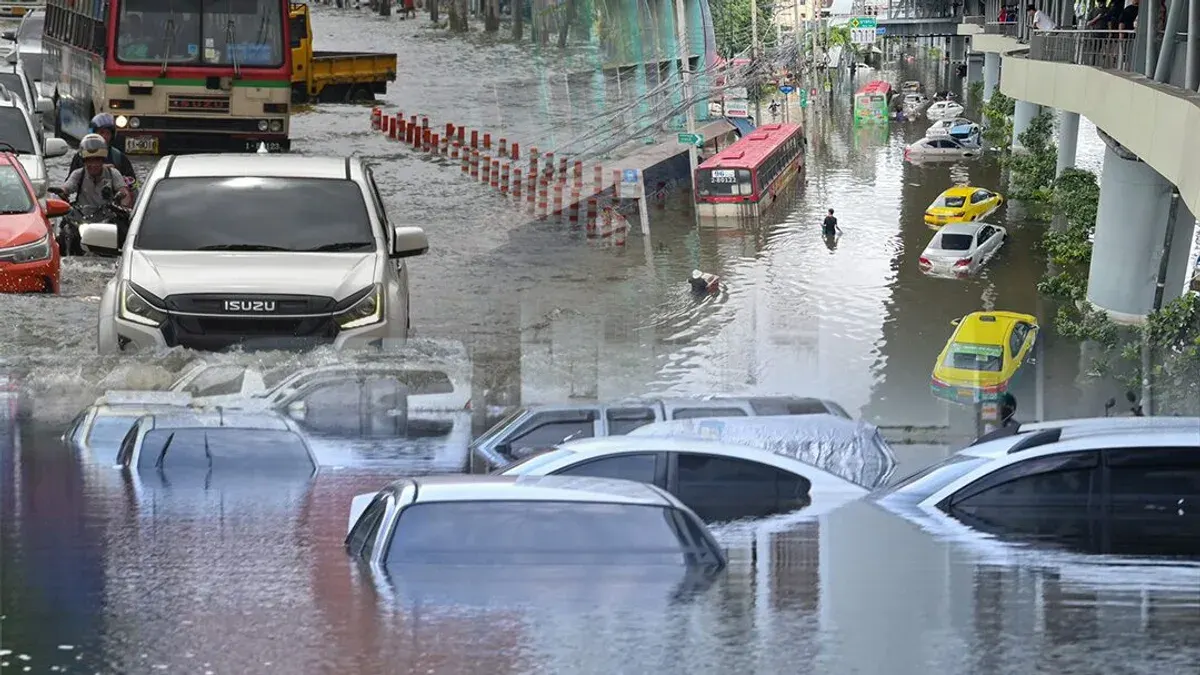
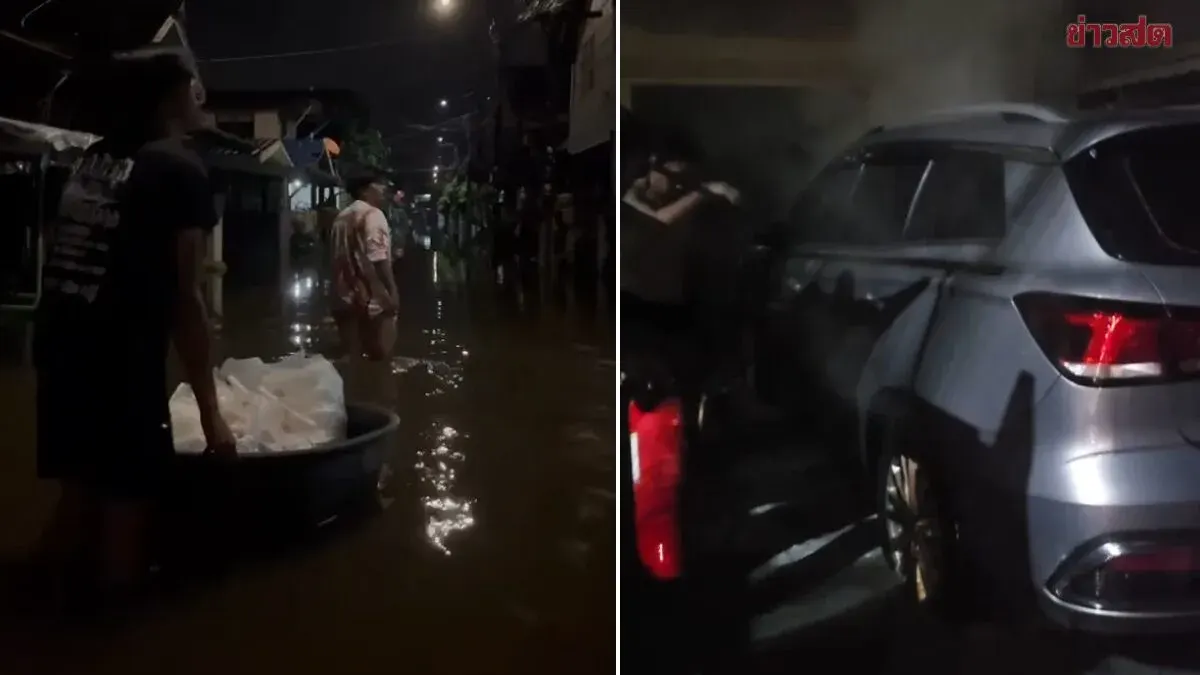
The report begins by urging drivers to stay calm and evaluate the situation before proceeding. If water reaches ankle to mid‑calf level (10‑20 cm), most vehicles can pass but small low cars should proceed cautiously to avoid water striking the undercarriage. At half‑wheel depth (20‑40 cm), small cars risk submerging the exhaust pipe, while larger vehicles can still move forward. When water reaches the door sills or headlights, ordinary cars must not attempt to cross; high‑clearance SUVs and pickup trucks may proceed with extreme caution. Water deeper than 60 cm endangers all vehicles, as it can enter the engine compartment, as shown by photos of buses stalled in Bang Kapi and other areas. If driving through water is deemed safe, drivers should first switch off the air‑conditioning to prevent the fan from spraying water into the engine bay, travel at low speed to maintain stability and reduce splashing pedestrians, keep engine revs steady to stop water from flowing back into the exhaust, keep a safe distance from the vehicle ahead because braking efficiency drops in water, and after exiting the flooded area pump the brakes repeatedly to dry the brake pads. Upon arrival, keep the engine running for a few minutes to expel moisture before shutting it down. If the engine stalls while in water, do not try to restart it; shift to neutral, apply the parking brake, turn on hazard lights, exit the vehicle immediately, move it to a safe spot, disconnect both battery terminals to cut electricity and prevent short circuits, check the air filter for water, and if water has entered the engine compartment do not attempt to use the vehicle—contact your insurer, a service centre, or a tow truck for repairs. For electric vehicles, the advice is to avoid water higher than the lower door edge, as deeper water obscures hazards that could damage the battery pack; EVs should not remain submerged longer than about thirty minutes because prolonged immersion risks water seeping into high‑voltage battery systems and under‑floor electronics, potentially causing short circuits or severe damage, as illustrated by an EV that caught fire after being left in water at Don Mueang.