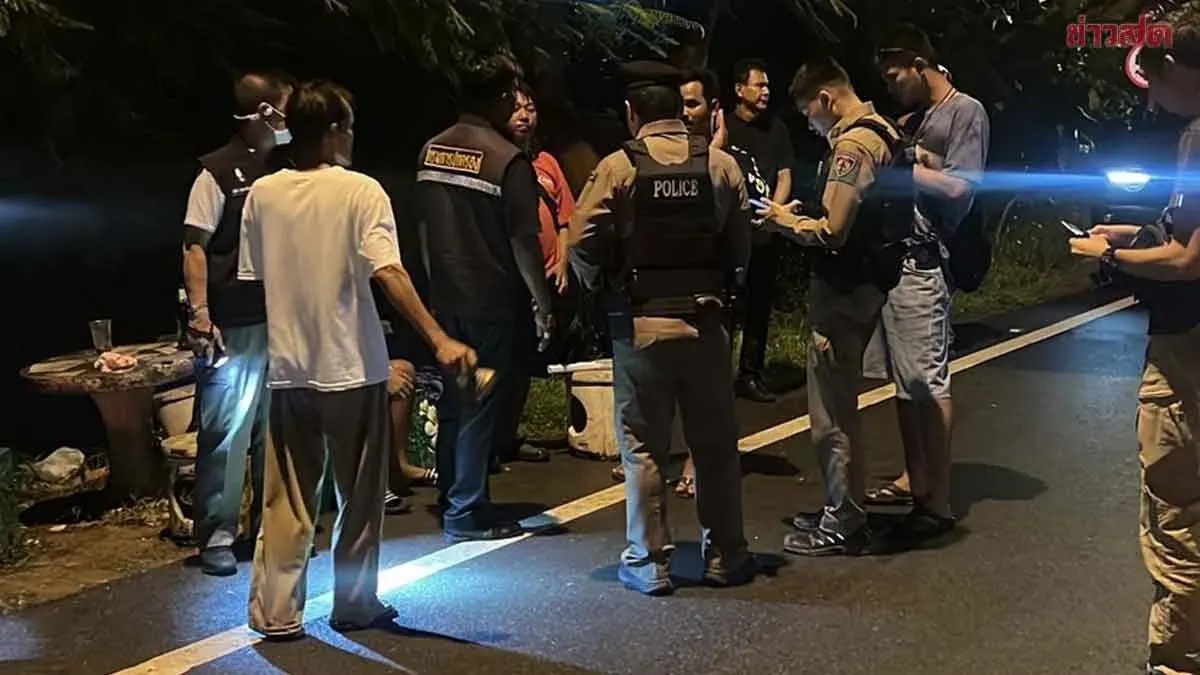
The nearest recompression chamber to Koh Lanta is in Phuket
Koh Lanta's deepest dive sites, Hin Daeng and Hin Muang, sit two hours from shore with the nearest decompression chamber in Phuket—a significant distance for emergency medical response. The multiplace chamber at Bangkok Hospital Siriroj ope
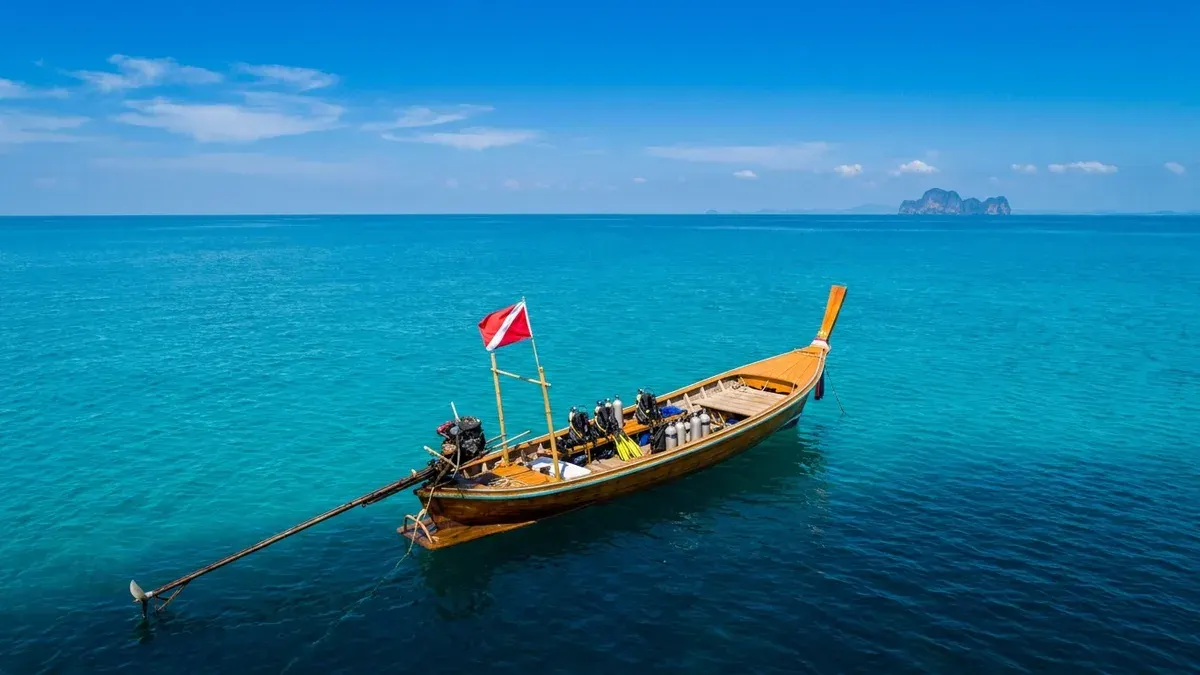
Photo: Illustration generated by Lanta News
Most people who dive from Koh Lanta come for two rocks. Hin Daeng and Hin Muang sit roughly two hours south by speedboat, well out of sight of the island, and they are the deepest drop-offs in Thai waters. Hin Daeng barely breaks the surface and its south-west face falls away past 60 metres. Hin Muang never breaks the surface at all: a submerged ridge topping out around 8 to 9 metres and bottoming somewhere between 60 and 70, commonly described by operators as the highest submerged vertical wall in Thailand. Currents there are moderate to strong and sometimes run downward.
That is the draw. The number that rarely comes up in the shop is this one: the nearest recompression chamber is in Phuket.
Where the chamber is, and what it is
The facility is at Bangkok Hospital Siriroj in Phuket, also known as Phuket International Hospital, operating as SSS Phuket and Hyperbaric Services Thailand. According to the hospital's own description of it, it opened in 1996 and was the first diver recompression chamber in southern Thailand.
It is a multiplace chamber, meaning several people are pressurised together rather than one patient sealed in a tube. It holds up to four occupants including an inside attendant, so a nurse or technician can stay with the patient through treatment. It pressurises to 165 feet, 50 metres, which the hospital contrasts with chambers limited to 60 feet. There is continuous voice contact and the inside is watched through cameras and viewing ports.
The hospital lists a 24-hour emergency line on 081-0819000 and office numbers 076-209-347 and 076-361-888 extension 3100, with office hours Monday to Friday, 09:00 to 18:00. Emergency service is stated as 24 hours, seven days a week.
It does not describe its coverage by island or province. It describes it by coastline: the chamber serves the entire west coast of Thailand, from the northern border with Myanmar to the Malaysian border. Koh Lanta, Koh Phi Phi, Koh Haa and the Krabi dive sites all sit inside that stretch, and there is no closer chamber along it.
Why that geography is particular to Lanta
A diver who gets into trouble at Hin Daeng is not at a beach. They are two hours from the pier by boat, and then still on an island. Getting to Phuket from Koh Lanta means the road north, the bridge or the vehicle ferry, and then the long run up through Krabi province. Nobody we can cite publishes a transfer time for that journey as a medical evacuation, so we are not going to invent one. The honest version is that it is measured in hours, not minutes, and that the boat ride happens first.
This is not an argument against diving Hin Daeng. It is the reason experienced operators there ask for recent dives and logged experience, run conservative profiles, and why dedicated dive insurance is the normal advice for deep Andaman days rather than an upsell.
What is on the island
Koh Lanta has a government hospital. Its listed address is 118 Ko Lanta Yai, Ko Lanta, Krabi 81150, with the telephone number 075-697-100, and it sits on the Ko Lanta Yai side towards Lanta Old Town rather than in Saladan. Island guides describing it as being in Saladan appear to be confusing it with the district administration; the address and coordinates point to the Old Town road.
It is a small district hospital, and that is the useful thing to understand about it. It is the right place for a wound, a fracture that needs setting, a drip, an X-ray, a fever that will not break. It is not a trauma centre and it has no chamber.
For an ambulance anywhere in Thailand the number is 1669. It is the national emergency medical line, run by the National Institute for Emergency Medicine, which took on the role in 2008. Calling it is free and it answers around the clock. Two caveats worth knowing before you need them: outside the major cities the operator may only speak Thai, and a free ambulance is not free treatment. The ride costs nothing; the hospital bill is yours or your insurer's.
What leaves the island
Anything needing surgery, intensive care or a specialist goes off Koh Lanta. The usual destinations are the larger hospitals in Krabi town, in Trang, or in Phuket, with Phuket carrying the highest level of care on this coast and, for divers, the chamber.
If you take one practical thing from this piece, make it the order of operations. The island can stabilise you. Krabi and Trang can operate on you. Only Phuket can treat decompression illness. Knowing which of those three you need is the decision that costs time, and time is the whole currency in both trauma and a bend.
What we could not verify
We would rather print the gaps than smooth over them.
- Whether Krabi still has a diving evacuation centre. An older dive-safety directory, dating from around 2004, lists an evacuation centre at Ao Nang, which is a first point of contact rather than a treatment chamber. We could not confirm it is still operating: the chamber network's own website refused automated access when we tried to read it. Treat Phuket as the chamber and check anything else with your operator.
- The size of Koh Lanta Hospital. We found no published bed count from a source we trust, so we have not given one.
- Whether the tourist police line on 1155 can dispatch an ambulance. Several English-language guides say it speaks English but cannot send one. We have not been able to confirm that from an official source, so we have not built advice on it.
- Transfer times. See above. Hours, and we will not pretend to a figure.
Phone numbers and opening hours change. Everything here was read in September 2026 and the numbers are quoted from the hospital that operates the chamber. Before a deep day out, the number worth having in your own phone is your operator's, and then the one in this article.