Ranong Convenes Crisis Talks on Kraburi River Pollution
Ranong authorities convened crisis talks to address severe pollution in the Kraburi River, where turbidity levels have spiked to dangerous levels due to contamination flowing from Myanmar, affecting residents who haven't had safe water acce
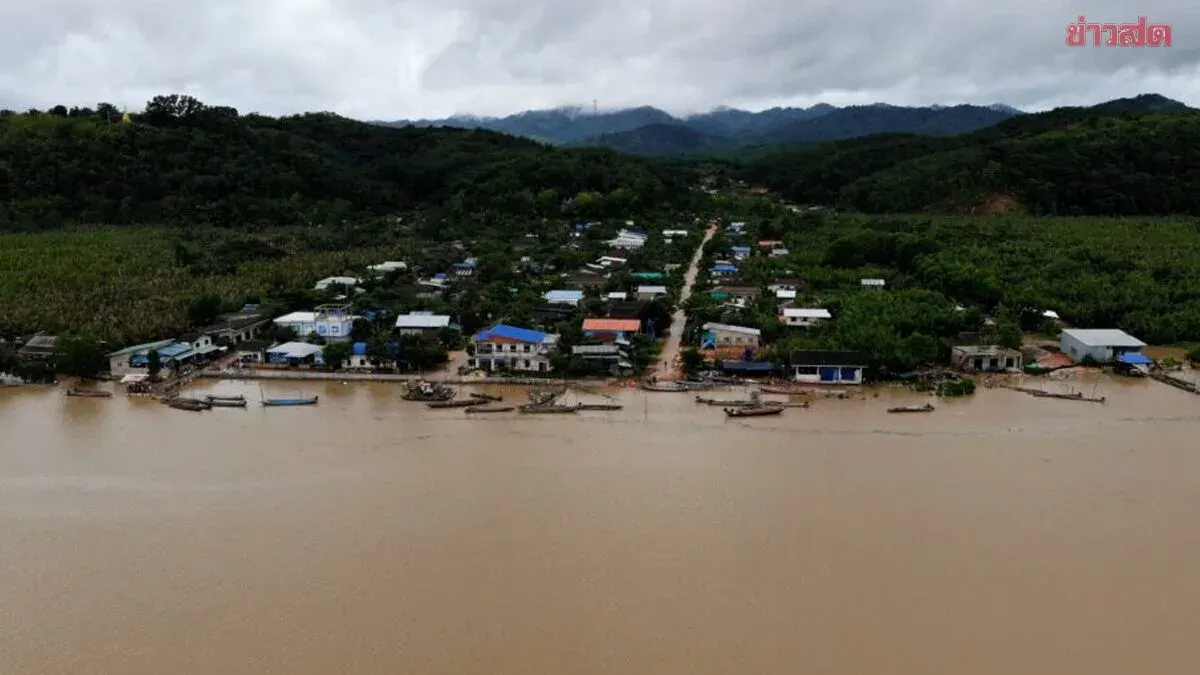
On September 22, Rachan Meenoi, governor of Ranong Province, chaired the first meeting of the working group to resolve water turbidity problems in the Kraburi River. The meeting monitored the situation and examined solutions, bringing together officials from natural resources and environment, fisheries, public health, industry, customs, the military, and local administrative organizations from Ranong, as well as community leaders and Kraburi River conservation networks. The Regional Environment and Pollution Control Office Region 15 also participated online.
A subdistrict administrator from Pak Chan noted that residents have lived along the Kraburi since childhood, when the water was clear and safe for swimming and rafting activities. The current turbidity has caused distress, and residents want the river restored to its clear, clean state.
Arun Abhiruk Vorakorn from the Kraburi River conservation network proposed water quality and contamination testing at midstream and downstream points to assess impacts, with participation from local authorities. The network also submitted ten prior proposals, including elevating the issue to national importance, holding monthly meetings with public disclosure of results, monitoring public health, testing water quality and sediment monthly, checking residues in aquatic life every six months, conducting deep-impact studies on environment, ecosystems, health, and community economy, negotiating the closure of illegal Myanmar mines with traceability systems, restoring ecosystems, promoting community participation, creating public databases, allocating budgets for monitoring and research, and issuing regular progress reports.
Anantchai Vongpayak from the conservation network suggested local organizations help establish water quality monitoring points to enable community involvement, while expressing concern that even when residue and heavy metal tests fall within standard limits, this does not mean contamination is not accumulating in aquatic life.
Wirasring Kachasing, chief of Pak Chan Subdistrict Administration Organization, stated that residents have been affected by the river problem for seven years and cannot use water from the Kraburi. The subdistrict bears the cost of supplying water and requested budget allocation for a backup water reservoir to produce drinking water, plus permission to use wildlife sanctuary land.
A representative from the Regional Environment and Pollution Control Office Region 15 presented water quality monitoring data showing turbidity increasing throughout this year, particularly where the Kraburi receives water from Khlong Yuang on the Myanmar side. In April 2025, during the dry season, turbidity peaked at 209 NTU with reddish discoloration, compared to just 12–16 NTU upstream in Thai territory at Khlong Karani. Turbidity exceeding 100 NTU is considered severe and critical to aquatic life.