Thailand and Japan Deepen Economic Partnership on Future Industries
Japan's ITOCHU Corporation met with Thailand's Commerce and Industry ministers to explore joint development of future industries, advanced semiconductors, clean energy, and high-value supply chains as the countries mark 140 years of diploma
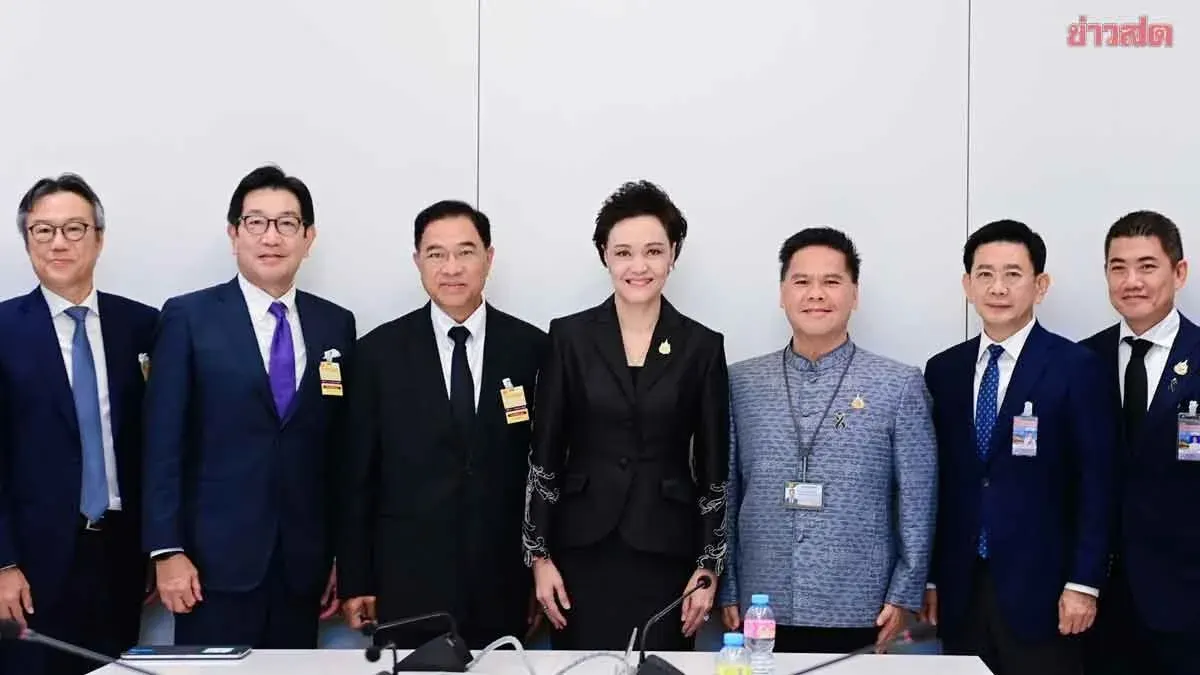
ITOCHU held discussions with the Commerce and Industry ministries to elevate the Thai-Japan partnership toward joint development of future industries and high-value supply chains, creating new business links.
Deputy Prime Minister and Commerce Minister Supachai Suthummapanth, along with Industry Minister Weeravudh Silpaarcha, received Keita Ishii, President and Chief Operating Officer of ITOCHU Corporation, joined by Klint Sarasin, chairman of the Thai-Japan Association and honorary chairman of the Thai Chamber of Commerce and Board of Trade, and senior management of ITOCHU Corporation on September 8, 2025, to exchange views on economic conditions and investment opportunities, as well as prospects for deepening economic cooperation between Thailand and Japan in future industries.
Supachai noted that Thailand and Japan maintain a close and enduring economic relationship, with Japanese business playing a crucial role in building industrial bases, supply chains, and employment in Thailand over time. Japan therefore represents far more than a trading partner and investor but serves as a strategic partner and trusted ally with which Thailand wishes to develop relations toward a new model responsive to shifts in the global economy and supply chain landscape.
In 2026, Thailand and Japan will mark 140 years of diplomatic relations, a significant moment to launch a new chapter of cooperation. Both countries can build on their traditional model, in which Japan invested and used Thailand as a production hub, to move toward co-creation, joint production, and new business and supply chain development, including joint expansion of goods and services to third countries, ASEAN, and global markets.
During discussions, both sides exchanged views on changes in the global investment and supply chain landscape and rising competition for investment. Thailand emphasized the importance of creating economic balance, diversifying risks, and partnering with strategic allies, particularly Japan, which possesses strengths in technology, capital, expertise, and global business networks, while Thailand offers a production base, supply chains, and connections to ASEAN markets—capabilities that can be combined to create new business opportunities.
Sectors identified for expanded cooperation include food and food processing, where Thailand has a strong raw material and production base with opportunities to add value through processing; clean energy; advanced semiconductors; automotive and future-oriented continuous industries; data centers; artificial intelligence; and communications technology—all sectors Thailand seeks to attract in ways that generate employment, knowledge transfer, and greater linkages with domestic entrepreneurs.
Both sides also discussed cooperation in pharmaceuticals and medical services, technologies and services for aging societies, and tourism and hospitality businesses. As both Thailand and Japan face demographic shifts toward aging populations, and Japan possesses knowledge, technology, and experience that can be leveraged alongside Thailand's capabilities, the two countries can jointly develop new products and services and expand them to other markets in the future.
Japan also shared experience in resource efficiency and waste reduction, as well as approaches to managing aging societies—issues of mutual concern.