MG Urban EV Covers Bangkok-Chonburi Route on Single Charge
MG's locally-made Urban EV successfully completed a Bangkok-Chonburi highway route on a single charge, delivering stable performance and responsive handling despite wind noise above 110 km/h and a firm ride over rough surfaces.
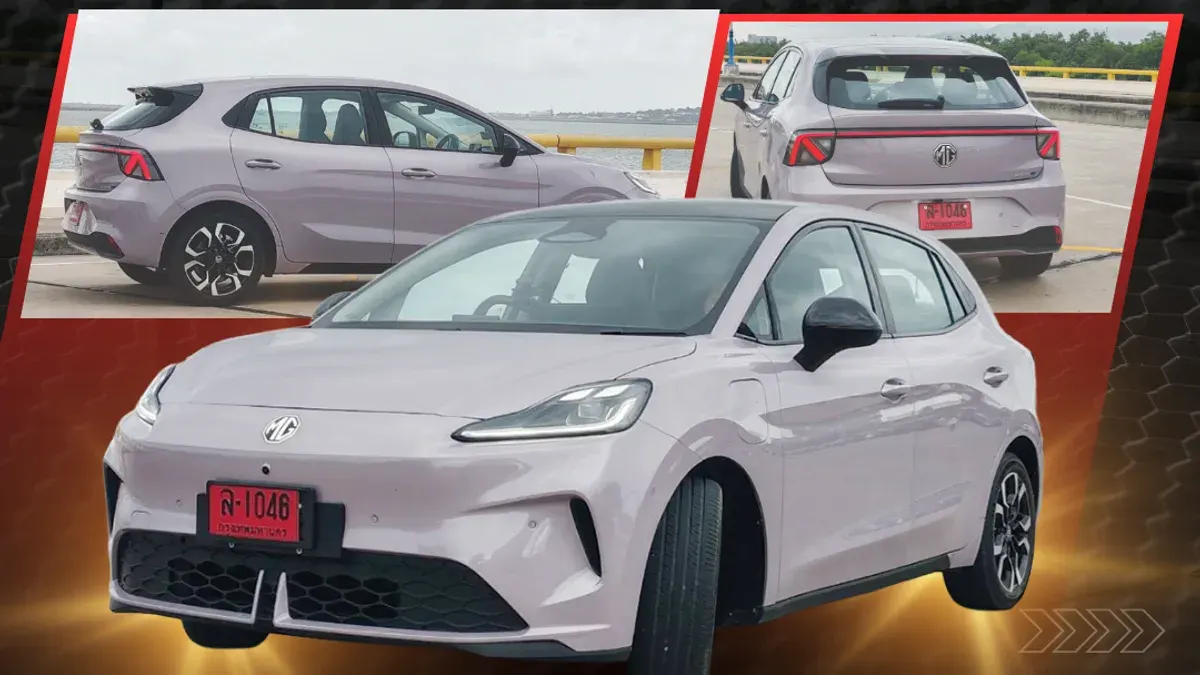
We previously tested the MG Urban before its official launch, but with limited driving time and staged scenarios designed to showcase the vehicle's advanced features. Now that we've had the chance to borrow the top-spec Ultra model for personal testing, we're sharing our real-world findings with interested readers.
The MG Urban is a compact five-door electric hatchback aimed at urban drivers, manufactured locally to European export standards. Using comfort mode and light regenerative braking, the motor delivers a maximum output of 160 horsepower and peak torque of 250 Newton-metres—not thrilling, but adequate for responsive acceleration suited to its compact size. The vehicle is fitted with a 53.9 kWh lithium-ion phosphate battery from CATL.
Despite its urban focus, we wanted to test highway performance, so we headed toward Chonburi on the Burapha Road. The car accelerates steadily without dramatic speed gains but maintains consistent power delivery. On long, straight stretches at highway speed, the vehicle remains stable with responsive steering and no sense of stress.
At lower speeds, the electric motor operates quietly, but wind noise becomes noticeable above 110 km/h and grows more pronounced at higher velocities. We took an expressway exit due to heavy traffic and took smaller roads to shorten the distance. There we encountered rough pavement with significant potholes, revealing that the car's high-speed stability comes at the cost of ride comfort—while it handles bumps gradually, vibrations still transmit through the firm seats, making impacts quite perceptible.
The Ultra model features a "Gender Neutral & Trendy" design with a glowing logo, LED headlights with automatic control, and Union Jack-style LED rear lights befitting its British lineage. It includes an automatic rear window demister, rear spoiler, and powered tailgate. A V2L system transforms the vehicle into a power source for appliances up to 3.3 kW.
Inside, a two-tone grey and black interior includes a leather-wrapped multifunctional steering wheel, synthetic leather seats with six-way electric adjustment and driver seat ventilation for the driver, and four-way adjustment for the front passenger. There is a 256-shade interactive ambient light system, a seven-inch instrument display, and a 15.6-inch touchscreen infotainment system—though the latter sometimes responds sluggishly to certain commands. The car includes wireless phone charging, a full panoramic sunroof with shade, and rear seat air vents.
Safety systems are comprehensive, including Level 2+ Advanced Driver Assistance System and automatic parking assistance backed by 21 sensors, cameras, and radars around the vehicle. On the return journey via the Banguena-Trat route toward Bangkok, we encountered construction zones with adequate advance warning in most cases, though some transitions were tight.